“With respect to the development of powers devoted to coping with specific scientific and economic problems we may say that the child should be growing in manhood. With respect to sympathetic curiosity, unbiased responsiveness, and openness of mind, we may say that the adult should be growing in childlikeness.”
Quote by John Dewey
Work
Democracy and Education: Top American Authors
Democracy and Education: Top American Authors is a scholarly compilation that delves into the intersection of democracy and education. The book examines how leading American authors have shaped the discourse on education within a democratic framework, highlighting their perspectives on the importance of education for fostering a democratic society. It includes analyses of various educational theories and practices as presented by these authors, providing a comprehensive view of the evolution of educational thought in the United States. more
Author
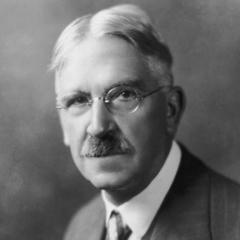
John Dewey
John Dewey was an American philosopher and educator, born on October 20, 1859, and died on June 1, 1952. He was a leading figure in the philosophy of pragmatism and had a profound impact on 20th-century education, philosophy, and the social sciences. more
You May Also Like
Source: Democracy and Education: Top American Authors
Source: Democracy And Education
Source: Democracy And Education
Source: Democracy and Education: Top American Authors
Source: Democracy and Education: Top American Authors
Source: Democracy And Education
Source: The Political Writings
Source: Democracy and Education: Top American Authors