Quotessence
Home / Quotes / Quote by Bruno Bettelheim

Quote by Bruno Bettelheim

“The parent must not give in to his desire to try to create the child he would like to have, but rather help the child to develop--in his own good time--to the fullest, into what he wishes to be and can be, in line with his natural endowment and as the consequence of his unique life in history.”

Quote by Bruno Bettelheim

Author
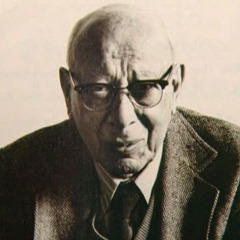
Bruno Bettelheim
Bruno Bettelheim

Bruno Bettelheim was a renowned psychologist, born on August 28, 1903, and died on March 13, 1990. He is known for his deep research in child psychology, dream analysis, and parent-child relationships. more

You May Also Like

“Fairy tales are loved by the child not because the imagery he finds in them conforms to what goes on within him, but because--despite all the angry, anxious thoughts in his mind to which the fairy tale gives body and specific content--these stories always result in a happy outcome, which the child cannot imagine on his own.”

“A parent who from his own childhood experience is convinced of the value of fairy tales will have no difficulty in answering his child's questions; but an adult who thinks these tales are only a bunch of lies had better not try telling them; he won't be able to related them in a way which would enrich the child's life.”

“Plato--who may have understood better what forms the mind of man than do some of our contemporaries who want their children exposed only to "real" people and everyday events--knew what intellectual experience made for true humanity. He suggested that the future citizens of his ideal republic begin their literary education with the telling of myths, rather than with mere facts or so-called rational teachings.”

“Although we like to think of young children's lives as free of troubles, they are in fact filled with disappointment and frustration. Children wish for so much, but can arrange so little of their own lives, which are so often dominated by adults without sympathy for the children's priorities. That is why children have a much greater need for daydreams than adults do. And because their lives have been relatively limited they have a greater need for material from which to form daydreams.”

“The goal in raising one's child is to enable him, first, to discover who he wants to be, and then to become a person who can be satisfied with himself and his way of life. Eventually he ought to be able to do in his life whatever seems important, desirable, and worthwhile to him to do; to develop relations with other people that are constructive, satisfying, mutually enriching; and to bear up well under the stresses and hardships he will unavoidably encounter during his life.”

“A child... who has learned from fairy stories to believe that what at first seemed a repulsive, threatening figure can magically change into a most helpful friend is ready to believe that a strange child whom he meets and fears may also be changed from a menace into a desirable companion.”

“As Anna Freud remarked, the toddler who wanders off into some other aisle, feels lost, and screams anxiously for his mother neversays "I got lost," but accusingly says "You lost me!" It is a rare mother who agrees that she lost him! she expects her child to stay with her; in her experience it is the child who has lost track of the mother, while in the child's experience it is the mother who has lost track of him. Each view is entirely correct from the perspective of the individual who holds it .”

“The good enough mother, owing to her deep empathy with her infant, reflects in her face his feelings; this is why he sees himselfin her face as if in a mirror and finds himself as he sees himself in her. The not good enough mother fails to reflect the infant's feelings in her face because she is too preoccupied with her own concerns, such as her worries over whether she is doing right by her child, her anxiety that she might fail him.”

“The child knows only that he engages in play because it is enjoyable. He isn't aware of his need to play--a need which has its source in the pressure of unsolved problems. Nor does he know that his pleasure in playing comes from a deep sense of well-being that is the direct result of feeling in control of things, in contrast to the rest of his life, which is managed by his parents or other adults.”