Quotessence
Home / Quotes / Quote by Beverly Daniel Tatum

Quote by Beverly Daniel Tatum

“We need to acknowledge that an important part of interrupting the cycle of oppression is constant reeducation, and then sharing what we learn with the next generation.”

Quote by Beverly Daniel Tatum

Author
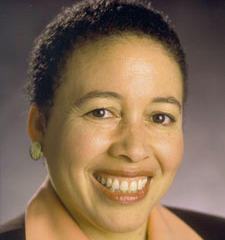
Beverly Daniel Tatum

Beverly Daniel Tatum is an American psychologist and educator, born on September 27, 1954. She is renowned for her research in the fields of race relations and multicultural education, particularly her work on racial identity and racial bias. Professor Tatum teaches psychology at Boston University and has held administrative positions in several academic institutions. more

You May Also Like

“The particular combination of the explicit communication of high standards and the demonstrated assurance of the teacher's belief in the student's ability to succeed (as evidenced by the effort to provide detailed, constructive feedback) was a powerful intervention for Black students...it was an exceedingly effective way to generate the trust needed to motivate Black students to make their best effort.”

“...most Americans have internalized the espoused cultural values of fairness and justice for all at the same time that they have been breathing the smog of racial biases and stereotypes pervading popular culture...[it leaves] many Whites feeling uneasy, uncomfortable, and even perhaps fearful in the presence of Black people, often without their conscious awareness of these feelings.”

“One White woman...wrote: '...I acknowledge the need for White students to listen to minority students when they express anger against a system which has failed them without taking this communication as a personal attack.' Indeed, this is what one young woman of color hoped for: 'When I'm participating in a cross-racial dialogue, I prefer that the people I'm interacting with understand why I react the way I do. When I say that I want understanding, it does not mean that I'm looking for empathy. I merely want people to know why I'm angry and not to be offended by it.' In order for there to be meaningful dialogue, fear, whether of anger or isolation, must eventually give way to risk and trust. A leap of faith must be made. It is not easy, and it required being willing to push past one's fear. Wrote one student, 'At times it feels too risky...but I think if people remain equally committed, it can get easier. It's a very stressful process, but I think the consequences of not exploring racial issues are ultimately far more damaging'.”

“...it is always a bit of a gut punch to realize that someone you have been sitting next to for months or even years secretly harbors view that deny your basic humanity as a black woman. No matter how many times it happens, I have yet to get used to it. ...I really really wanted this to be just a matter of misunderstanding. I really wanted this to be a case where he just didn't know how harmful everyday racism is, and once he did, he would change his mind...It seemed far more important to him that the white people who were spreading and upholding racism be spared the effects of being called racist, than sparing his black friend the effects of that racism. ...That was when I learned that this was not a friend I could take to about this really important part of my life. I couldn't be my full self around him, and he would never truly have my back. He was not safe. I wasn't angry, I was heartbroken.”

“There is no question that American police use their weapons more than police in any other developed democracy. Unfortunately, we don’t have fully accurate information about the number or nature of homicides at the hands of police. Despite a 2006 law requiring the reporting of this information (reauthorized in 2014), many police departments do not comply. Researchers have had to rely on independent information such as local news stories to cobble together numbers. One effort by the Guardian and Washington Post documented 1,100 deaths in 2014, 991 in 2015, and 1,080 in 2016— fewer than in the 1960s and 1970s, but still far too many.”