Quotessence
Home / Quotes / Quote by Andy Warhol

Quote by Andy Warhol

“If you see a person who looks like your teenage fantasy walking down the street, it's probably not your fantasy, but someone who had the same fantasy as you and decided instead of getting it or being it, to look like it, and so he went to the store and bought the look that you both like.”

Quote by Andy Warhol

Book:Fame

Work

Fame

This book delves into the multifaceted nature of fame, examining its origins, the psychological effects on celebrities, and the cultural implications of a society that often prioritizes fame over other values. It offers an in-depth analysis of the media's role in shaping perceptions of fame and the personal struggles that come with being in the public eye. more

Author

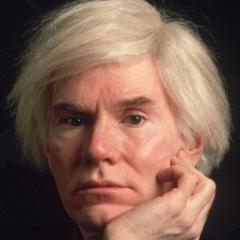
Andy Warhol
Andy Warhol

Andy Warhol was a leading figure in the Pop Art movement, known for his distinctive screen printing and repetition of images. Born on August 6, 1928, and passing away on February 22, 1987, Warhol's work spanned various fields including painting, photography, film, music, and commercial design, profoundly impacting the art and culture of the 20th century. more

You May Also Like

“In relation to [ethics as a pursuit of desire], we should mention yet another version of this 'path of passivity', which consists in trying to extort from the Other the 'right answer' . Here, the subject wants the Other to choose for him. For such a subject, the Other always appears in the form of some other person. One could say that this subject aims at elevating some small other to the rank of the (big) Other. The subject spends his life imposing choices upon others, reminding them that they are free individuals who must know what they really want. To take an example: in the case of a love affair that does not suit him any more, such a subject will never break it up, he will delegate this decision to the other. He will play the honest one, he will admit that he is cheating, that he is indeed weak and that apparently he is not up to a real relationship. He will tell the other: 'There, these are the facts, this is how I am, I'm laying myself bare before you - what more can I do? - and now it's your turn to make a decision, to make your choice. ' And if this other decides to leave, she leaves precisely as the (big) Other. We might even say that all the activity of such a subject is leading towards this scene of a miraculous metamorphosis of the other into the Other (who knows what she wants or does not want, and acts accordingly).”