Quotessence
Home / Quotes / Quote by Lawren Harris

Quote by Lawren Harris

“The source of our art then is not in the achievements of other artists in other days and lands, although it has learned a great deal from these, our art is founded on a long and growing love and understanding of the North in an ever clearer experience of oneness with the informing spirit of the whole land and a strange brooding sense of Mother Nature fostering a new race and a new age... So the Canadian artist was drawn North.”

Quote by Lawren Harris

Work

The Best of the Group of Seven

Browse quotes and source details for this work. more

Author
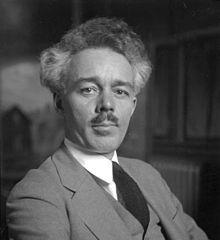
Lawren Harris
Lawren Harris

Lawren Harris, born on October 23, 1885, and died on January 29, 1970, was a Canadian painter known for his paintings of the Canadian north. His work, characterized by cold tones and geometric abstraction, has had a profound impact on the Canadian art scene. more

You May Also Like

“On the one hand, it is in and through creative minds that the community fulfils itself at its best and reaches its highest forms; and on the other, it is from them that the community recovers the social substance with which it had nourished them, transfigured by their creative alchemy into a still higher social substance. The creative evolution of his community and his own creative evolution must always be the two earnest purposes of the individual. Its own creative evolution and that of the individuals in its midst must always be the two earnest purposes of the community.”

“I recognized the great monument from the illustration in the copy of /The Jungle Book/ that my mother kept in the top drawer of my bedside table. When I went with Sophia to the Taj Mahal for the first time, I was not as enchanted by the real mausoleum as I had been by its plaster, paint, and paper replica in the studio; the original posed a dreadfully seductive promise in cool marble of a strangely painful loveliness, a lover's lie that death itself might in some mysterious way, because of love, be lovely.”

“Dalin must have whiffed the anarch in me, a man with no ties to state or society. Still, he was unable to sense an autonomy that puts up with these forces as objective facts but without recognizing them. What he lacked was a grounding in history. Opposition is collaboration; this was something from which Dalin, without realizing it, could not stay free. Basically, he damaged order less than he confirmed it. The emergence of the anarchic nihilist is like a goad that convinces society of its unity. The anarch, in contrast, not only recognizes society a priori as imperfect, he actually acknowledges it with that limitation. He is more or less repulsed by state and society, yet there are times and places in which the invisible harmony shimmers through the visible harmony. This is obviously chiefly in the work of art. In that case, one serves joyfully. But the anarchic nihilist thinks the exact opposite. The Temple of Artemis, to cite an example, would inspire him to commit arson. The anarch, however, would have no qualms about entering the temple in order to meditate and to participate with an offering. This is possible in any temple worthy of the name.”