Quotessence
Home / Quotes / Quote by Philip Roth

Quote by Philip Roth

“...I realized that my father, of all these men, was the most obstinate, helplessly bonded to his better instincts and their excessive demands. I only then understood that he had quit his job not merely because he was fearful of what awaited us down the line should we agree like the others to be relocated, but because, for better or worse, when he was bullied by superior forces that he deemed corrupt it was his nature not to yield--in this instance, to resist either running away to Canada, as my mother urged our doing, or bowing to a government directive that was patently unjust. There were two types of strong men: those like Uncle Monty And Abe Steinheim, remorseless about their making money, and those like my father, ruthlessly obedient to their idea of fair play.”

Quote by Philip Roth

Work

The Plot Against America

Browse quotes and source details for this work. more

Author
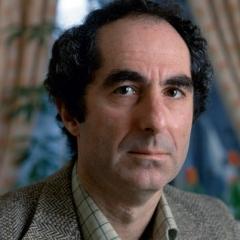
Philip Roth
Philip Roth

Philip Roth (1933-2018) was one of America's most influential contemporary novelists, renowned for his profound explorations of Jewish-American identity, sexuality, politics, and the human condition. His breakthrough work, "Portnoy's Complaint" (1969), became a landmark in American literature. Roth received two National Book Awards and was a multiple-time Pulitzer Prize finalist. Over his six-decade career, he published more than 30 books that significantly shaped American fiction. He passed away in New York City on May 22, 2018, at age 85. more

You May Also Like

“The only difference between having an affair here and having an affair there was that the American men would always ended up losing half of his estates over a woman he was infatuated just as much as the next tramp who would come his way, while Japanese men would only earn more respect from their subordinates through the possession of much younger women, as a sign of prowess and affluence, while their wives at home, as if there were rule books distributed nationally on the “proper” marriage etiquette for all young Japanese women to read before they enter into the matrimony, would turn a blind eye on their disloyalty quietly.”

“The poison that is war does not free us from the ethics of responsibility. There are times when we must take this poison - just as a person with cancer accepts chemotherapy to live. We can not succumb to despair. Force is and I suspect always will be part of the human condition. There are times when the force wielded by one immoral faction must be countered by a faction that, while never moral, is perhaps less immoral. We in the industrialized world bear responsibility for the world’s genocides because we had the power to intervene and did not. We stood by and watched the slaughter in Chechnya, Sri Lanka, Sierra Leone, Liberia, and Rwanda where a million people died. The blood for the victims of Srebrenica- a designated UN safe area in Bosnia- is on our hands. The generation before mine watched, with much the same passivity, the genocides of Germany, Poland, Hungary, Greece, and the Ukraine. These slaughters were, as in, Gabriel Garcia Marquez’s book Chronical of a Death Foretold, often announced in advance”

“I might be asked, ‘Do you equally reject the approach which begins with the question “What do modern children need?” — in other words, with the moral or didactic approach?’ I think the answer is Yes. Not because I don’t like stories to have a moral: certainly not because I think children dislike a moral. Rather because I feel sure that the question ‘What do modern children need?’ will not lead you to a good moral. If we ask that question we are assuming too superior an attitude. It would be better to ask ‘What moral do I need?’ for I think we can be sure that what does not concern us deeply will not deeply interest our readers, whatever their age. But it is better not to ask the question at all. Let the pictures tell you their own moral. For the moral inherent in them will rise from whatever spiritual roots you have succeeded in striking during the whole course of your life. But if they don’t show you any moral, don’t put one in.”