Quotessence
Home / Quotes / Quote by Laurence J. Peter

Quote by Laurence J. Peter

Work

Peter's People and Their Marvelous Ideas

Browse quotes and source details for this work. more

Author
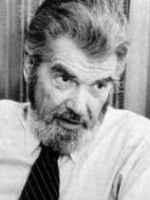
Laurence J. Peter
Laurence J. Peter

Laurence J. Peter was a renowned author and psychologist, best known for his book 'The Peter Principle'. This book introduced the Peter Principle, which states that in a hierarchy, every employee will eventually be promoted to a position they are unable to handle. more

You May Also Like

“Perhaps you can explain it to me, then,” she said, “how is it fair that my utterly inept cousin is in command of me, for no reason other than that he’s a man and I’m a woman? How is it fair that I master Latin and Greek as well as any man at Oxford, yet I am taught over a baker’s shop? How is it fair that a man can tell me my brain was wired wrong, when his main achievement in life seems to be his birth into a life of privilege? And why do I have to beg a man to please make it his interest that I, too, may vote on the laws that govern my life every day?”

“Max Planck once remarked that new scientific truths don’t replace old ones by convincing established scientists that they were wrong; they do so because proponents of the older theory eventually die, and generations that follow find the new truths and theories to be familiar, obvious even. We are optimists. We like to think it will not take that long. In fact, we have already taken a first step. We can see more clearly now what is going on when, for example, a study that is rigorous in every other respect begins from the unexamined assumption that there was some ‘original’ form of human society; that its nature was fundamentally good or evil; that a time before inequality and political awareness existed; that something happened to change all this; that ‘civilization’ and ‘complexity’ always come at the price of human freedoms; that participatory democracy is natural in small groups but cannot possibly scale up to anything like a city or a nation state. We know, now, that we are in the presence of myths.”

“We meet in the midst of a nation brought to the verge of moral, political, and material ruin. Corruption dominates the ballot-box, the Legislatures, the Congress…. The people are demoralized; The newspapers are largely subsidized or muzzled, public opinion silenced, business prostrated, homes covered with mortgages, labor impoverished…. The fruits of the toil of millions are badly stolen to build up colossal fortunes for a few, unprecedented in the history of mankind; and the possessors of these, in turn, despise the Republic and endanger liberty. From the same prolific womb of governmental injustice we breed the two great classes—tramps and millionaires.”

“Skinner shared how he came to worship an elite White Jesus Christ, who cleaned people up through “rules and regulations,” a savior who prefigured Richard Nixon’s vision of law and order. But one day, Skinner realized that he’d gotten Jesus wrong. Jesus wasn’t in the Rotary Club and he wasn’t a policeman. Jesus was a “radical revolutionary, with hair on his chest and dirt under his fingernails.” Skinner’s new idea of Jesus was born of and committed to a new reading of the gospel. “Any gospel that does not … speak to the issue of enslavement” and “injustice” and “inequality—any gospel that does not want to go where people are hungry and poverty-stricken and set them free in the name of Jesus Christ—is not the gospel.”