Quotessence
Home / Quotes / Quote by Michel Faber

Quote by Michel Faber

“People and their dwellings were such a thin dust on the surface of the globe, like invisible specks of bacteria on an orange, and the feeble lights of kebab shops and supermarkets failed utterly to register on the infinities of space above.”

Quote by Michel Faber

Work

The Book of Strange New Things

The story follows a pastor who is sent to a distant planet to establish a mission. The novel combines elements of science fiction with religious and philosophical inquiry. more

Author
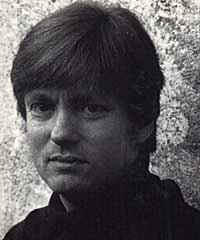
Michel Faber
Michel Faber

Michel Faber is a British writer known for his unique literary style and profound thematic explorations. His works span various genres, including novels, poetry, and plays. Faber's representative work, 'The Book of Strange New Things', is a science fiction novel that delves into religious faith, human exploration, and the mysteries of the universe. more

You May Also Like

“As researchers of the paranormal, we must understand there are ways to change the rhythm of time within us, ways to change the beat. These ways have been known since the beginnings of civilization, and possibly much earlier. And these ways would require no more effort than simply recognizing the secret rhythms of things. Moreover, we may learn to beat with them and begin to perceive a different kind of space, and ultimately discover an altogether different conception of reality…”

“To the man of science, on his unassuming and laborious travels, which must often enough be journeys through the desert, there appear those glittering mirages called 'philosophical systems'; with bewitching deceptive power they show the solution of all enigmas and the freshest draught of the true water of life to be near at hand; his heart rejoices, and it seems to the weary traveller that his lips already touch the goal of all the perseverance and sorrows of the scientific life... Other natures again, may well grow exceedingly ill-humoured and curse the salty taste which these apparitions leave behind in the mouth and from which arises a raging thirst – without one having been brought so much as a step nearer to any kind of spring.”

“The air in Africa is more significant in the landscape than in Europe, it is filled with loomings and mirages, and is in a way the real stage of activities. In the heat of the midday the air oscillates and vibrates like the string of a violin, lifts up long layers of grass-land with thorn-trees and hills on it, and creates vast silvery expanses of water in the dry grass.”

“Nous sommes prisonniers des images, des représentations, dirait Sarah, et seuls ceux qui, comme elle ou comme le colporteur, font le choix de se défaire de leur vie (si une telle chose est réellement possible) peuvent parvenir à autrui. Je me rappelle le bruit de mon urine tombant sur les pierres dans le silence enivrant du désert ; je me rappelle mes petites pensées, bien futiles au regard de l'infinité des êtres ; je n'avais pas conscience des fourmis et des araignées que je noyais dans l'urée. Nous sommes condamnés, comme dit Montaigne dans son dernier Essai, à penser comme on pisse, en chemin, vite et furtivement, en espions. Seul l'amour, pensai-je en regagnant la tente, en frémissant de froid et de désir au souvenir de la nuit précédente, nous ouvre vers autrui ; l'amour comme renoncement, comme fusion - rien d'étonnant à ce que ces deux absolus, le désert et l'amour, se soient rencontrés pour donner un des monuments les plus importants de la littérature universelle, la folie de Majnoun qui hurla sa passion pour Leyla aux cailloux et aux vipères à cornes, Leyla qu'il aima, aux environs de l'an 750, dans une tente toute pareille.”