Quotessence
Home / Quotes / Quote by Blaise Pascal

Quote by Blaise Pascal

“We are full of things that impel us outwards. Our instinct makes us feel that our happiness must be sought outside ourselves. Our passions drive us outwards, even without objects to excite them. External objects tempt us in themselves and entice us even when we do not think about them. Thus it is no good philosophers telling us: Withdraw into yourselves and there you will find your good. We do not believe them, and those who do believe them are the most empty and silly of all.”

Quote by Blaise Pascal

Work

Pensées

Pensées is a collection of Pascal's thoughts and reflections on various philosophical, religious, and scientific topics. more

Author

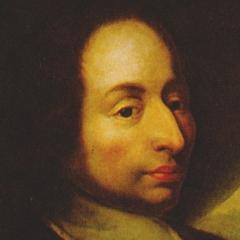
Blaise Pascal
Blaise Pascal

Blaise Pascal was a French mathematician, physicist, philosopher, and theologian. He was born on June 19, 1623, and died on August 19, 1662. Pascal's contributions to mathematics were particularly significant, with groundbreaking work in probability theory, analytical geometry, and early calculus. more

You May Also Like

“All the philosophical theories that exist have been created by the mistaken dualistic minds of human beings. In the realm of philosophy, that which today is considered true, may tomorrow be proved to be false. No one can guarantee a philosophy's validity. Because of this, any intellectual way of seeing whatever is always partial and relative. The fact is that there is no truth to seek or to confirm logically; rather what one needs to do is to discover just how much the mind continually limits itself in a condition of dualism. Dualism is the real root of our suffering and of all our conflicts. All our concepts and beliefs, no matter how profound they may seem, are like nets which trap us in dualism. When we discover our limits we have to try to overcome them, untying ourselves from whatever type of religious, political or social conviction may condition us. We have to abandon such concepts as 'enlightenment', 'the nature of the mind', and so on, until we are no longer satisfied by a merely intellectual knowledge, and until we no longer neglect to integrate our knowledge with our actual existence.”

“Оповідання «Собака» чітко вкарбовує це в памʼять. Підмогильний описує героя, який перші дні недоїдання намагається переконати себе, що Кант йому дорожчий за ковбасу. Але через три дні голоду він уже сміливо може сказати, що для нього дорожче. У пізнішому оповіданні «Третя революція» Підмогильний цю дилему теж побіжно згадує — усе підлягає обміну, тільки не книжки. Ніхто не виходив на базар із таким товаром, бо й за цілий університет не дістав би картоплини. На базарі людський розум зазнав смертельної поразки від свого одвічного суперника — людського шлунка.”

“The world we see ‘out there’ is a reflection of our cleverly molded shared consciousness, our collective belief installed through manipulation of our mimetic desire, not a given ‘thing’ that can’t be changed. This means, as in the adage, that we can heal the world only if we heal ourselves.”