“Are you what is called a happy man? Well! you are sad every day. Each day has its own great grief or its little care. Yesterday you were trembling for a health that is dear to you, to-day you fear for your own; to-morrow it will be anxiety about money, the day after to-morrow the diatribe of a slanderer, the day after that, the misfortune of some friend; then the prevailing weather, then something that has been broken or lost, then a pleasure with which your conscience and your vertebral column reproach you; again, the course of public affairs. This without reckoning in the pains of the heart. And so it goes on. One cloud is dispelled, another forms. There is hardly one day out of a hundred which is wholly joyous and sunny. And you belong to that small class who are happy! As for the rest of mankind, stagnating night rests upon them.”
Quote by Victor Hugo
Work
Victor Hugo's 'Les Misérables' is an epic narrative that delves into the lives of various characters, including Jean Valjean, a former convict seeking redemption, and Fantine, a woman struggling in poverty. The story is rich in historical detail and moral complexity, offering a profound examination of society's flaws and the resilience of the human spirit. more
Author
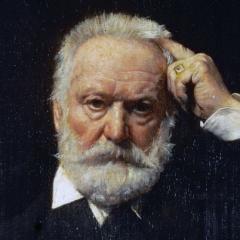
Victor Hugo, a French romantic poet, novelist, and playwright, was born on February 26, 1802, and died on May 22, 1885. He is considered one of the greatest writers in French literary history, known for his profound humanistic concerns and rich imagination. more
You May Also Like
“Do you want to have sex? I think we should have sex. CASUAL sex.”
“In everyday life do whatever I say. In the bedroom do whatever you'd like”