Quotessence
Home / Quotes / Quote by Nick Offerman

Quote by Nick Offerman

“Work hard. Work dirty. Choose your favourite spade and dig a small, deep hole; located deep in the forest or a desolate area of the desert or tundra. Then bury your cell phone. And then find a hobby. Actually, 'hobby' is not a weighty enough word to represent what I am trying to get across. Let's use 'discipline' instead. If you engage in a discipline or do something with your hands, instead of kill time on your phone device, then you have something to show for your time when you're done. Cook. Play music. Sew. Carve. Shit, bedazzle! Or, maybe not bedazzle. The arrhythmic is quite simple, instead of playing Draw Something, fucking draw something. Take the cleverness you apply to Words with Friends and utilize it to make some kick ass corn bread, Corn Bread with Friends - try that game. I'm here to tell you that we've been duped on a societal level. My favourite writer, Wendell Berry writes on this topic with great eloquence, he posits that we've been sold a bill of goods claiming that work is bad. That sweating and working especially if soil or saw dust is involved are beneath us. Our population especially the urbanites, has largely forgotten that working at a labor that one loves is actually a privilege.”

Quote by Nick Offerman

Author
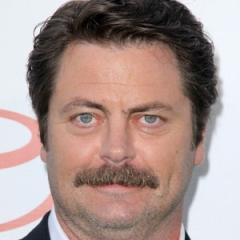
Nick Offerman
Nick Offerman

Nick Offerman, born on June 26, 1970, is an American actor. He gained widespread recognition for his role as Ron Swanson in the television series 'Parks and Recreation', a character known for its humor and distinctive personality. Offerman's acting career began on stage and has gradually shifted towards television and film. more

You May Also Like

“A csoda Kár volna magamat eladnom Célért, eszméért, okért, hitért. Hogy magyarázzam az eget másoknak. Eladni magamat semmiért. Te vén szilvafa, ugye, igazam van? Te tudod, te százesztendőt éltél!… S akkor sikított, elbőgte magát A kert mellett egy vén acéltehén. Nem is acél volt, hanem drágakő. Pálmaág-farkkal. Ott kinyúlt szegény. Tele gyerekekkel Kőrhinta forgott búgva, vidáman, Szarvai hegyén. És sírt és sírt, csak sírt, míg meg nem halt, Késnyelek hullottak pengétlenül A szemeibül. - Ó, mennyi dinamit lakik Én élve síró szemeimben! - A föld egyszerre elszaladt alólunk És elszaladt alólunk minden; Ég, csók, tűz, magam s a semmi. A tehén lángszőre szintén elszaladt, Aztán visszajött S a homlokomon kezdett énekelni. Fehér vízben hevertünk egymás mellett, Szivemben ő s az ő szivében én. Hátulról keresztülnéztem magamon S úgy láttam, hogy bennem él tovább A tehén. S tele gyerekekkel Kőrhinták forogtak vidáman Szarvai hegyén. Nem szúrt vele, csak fölemelte. Arrabökött, amerre elszaladtunk A föld, az ég, a tűz, a semmi s én S én szégyenverten lopózkodtam arra, Hogy embertszülő tüzet énekeljek Örökké, újra Jeges, havas Ismeretlen hegyek tetején.”

“És keressük az igazságot Lábunk elkophat hónaljig, Sej haj, fütyülve baktatunk, Igazságot keresünk, de Nem találunk még seholse. Nincsen batyunk, csak az agyunk, Betyárkodó Ábel vagyunk, Nem kérdik, hogy szívünk dög-é, Gondolatunk az ördögé, Lelkünket meg Isten fogja Sziklaszántó ostorosba. Hogyha tél van, hát didergünk S nem is tudjuk, hogy didergünk, Szemünk, fülünk lefagy együtt, Lázas szóval melengetjük, Nem hálunk soha árnyékban, Zsebünkben is csak szándék van, Magunk vagyunk: a kenyerünk, Hogyha vesztünk, úgyis nyerünk, Ínség, asszony nem bir velünk, Északnak meg délnek megyünk, Koldusokkal parolázunk, Ott a tanyánk, ahol ázunk, Összenőtt már a két kezünk S nem könyörgünk, nem vétkezünk, Nagy éhünk van s nem éhezünk, Mindig korábban érkezünk, Szájunkra a jövő hágott, Kiáltunk emberebb világot, Szeretetet, szabadságot, Szél a lábunk, arcunk áldott, Nézünk minden követ, ágot, Ahol utat ki se vágott, Sej haj, dallal, jó vigasszal, Asztaltalan szómalaszttal Keressük az igazságot.”

“In 1924–1929, sentences were determined by joint administrative and economic consideration. Beginning in 1924, because of national unemployment, the courts reduced the number of verdicts which sentenced prisoners to corrective labor while they continued to live at home and increased short-term prison sentences. These cases involved only nonpolitical offenders, of course. As a result, prisons were overcrowded with short-termers serving sentences of up to six months, and not enough use was being made of them in labor colonies. At the beginning of 1929, the People's Commissariat of justice of the U.S.S.R., in Circular No. 5, condemned short-term sentences and, on November 6, 1929, the eve of the twelfth anniversary of the October Revolution, when the country was supposedly entering on the construction of socialism, a decree of the Central Executive Committee and the Council of People's Commissars simply forbade all sentences of less than one year!”

“A soul without a body is as inhuman and horrible as a body without a soul—though the latter is the rule and the former the exception. It is the body, as a rule, which flourishes exceedingly, which draws everything to itself, which usurps the predominant place and lives repulsively emancipated from the soul. A human being who is first of all an invalid is all body; therein lies his inhumanity and his debasement. In most cases he is little better than a carcass.”

“Only now that he had great swathes of time could he begin to have hobbies. This was why art was such an incalculable luxury: it sent out a message saying, "I have time to subcontract all the menial, dull chores out to others; I waste hours in idle contemplation of a piece of cloth covered in spots; I am an art lover; I am time-rich. I can mooch about in a sea of pickled sharks.”