Quotessence
Home / Quotes / Quote by Upton Sinclair

Quote by Upton Sinclair

“Military men say that troops can stand twenty percent losses; more than that, they go to pieces. But we had many an outfit with only twenty percent survivors and they went on fighting.”

Quote by Upton Sinclair

Work

World's End

Browse quotes and source details for this work. more
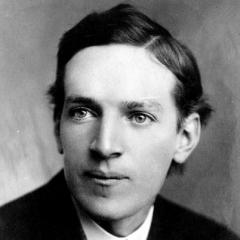
Author

Upton Sinclair
Upton Sinclair

Upton Sinclair was an American author, journalist, and political activist who became one of the most influential social critics of the early 20th century. His 1906 novel "The Jungle," which exposed the horrific conditions of the Chicago meatpacking industry, caused public outrage and directly led to the passage of the Pure Food and Drug Act. Sinclair wrote over 90 books throughout his life and won the Pulitzer Prize for Fiction in 1943 for "Dragon's Teeth." A committed socialist, he ran for governor of California and became a prominent voice for progressive reform in American society. more

You May Also Like

“The war was, very obviously, beginning to turn against Germany as the French soldiers gained ground and started to push the retreating Nazi troops in our direction. The news was that if things got worse, the German Army would be pushed over the Vosges Mountains and back into Alsace-Lorraine. We were issued instructions from the local Nazi administration to be prepared to help these retreating soldiers and were expected to billet, feed and, if necessary, nurse those wounded back to health. “Oh my,” I thought. We had so little but it was still more than we had in Mannheim. One village woman told us, “They are our soldiers and we can jolly well care for them.” Adolph agreed with this and told me that it would be my duty to look after any German soldier that was quartered under his roof. I thought that I fully understood what he meant by this! Since I was using the entire upstairs portion of the house, I would have to make room. Looking forward to helping them, I told the girls that we were to be kind to whoever came to us. “Imagine if it was your father.” It seemed the least we could do, and I hoped that I wasn’t expected to go beyond this. Instead of improving, things just got worse. To everyone’s astonishment the school was ordered closed and we were told to attend a meeting in the Village Center. Outside of the center, amidst much commotion, a uniformed Gestapo officer standing on the back of an open truck announced that German troops would be entering our village. Soon Military vehicles and German troops seemed to be everywhere. The Allied invasion of Normandy on June 6, 1944, marked a critical turning point in the European theater of World War II and we were beginning to feel the effects.”

“Stalin perceived the world in stark black and white. In the same way, he divided people, nations, actions, and ideas into only two absolute categories: “ours” and “theirs.” “Ours” were all those — and everything — that, at the moment of decision, fell under his control or contributed to strengthening it. “Theirs” were everyone else, and everything else. He saw his role as a strategist in constructing a system of power that would force each of the “ours,” individually and collectively, to work at the very limit of human endurance in order to fulfill his strategic design. That design was simple and ruthless: to endlessly increase the number and strength of the “ours” by coercing the “theirs” into becoming “ours,” while simultaneously destroying — or, as a last resort, neutralizing — all who refused to submit. — Volodymyr Shablia, Stone. Book One Context note: This passage reflects the ideological logic of Stalinist totalitarianism, where power was built on absolute division, forced loyalty, and systematic repression. In the Soviet worldview of the 1930s–1940s, survival depended on belonging to “ours” — or being destroyed as “theirs.”

“If your case, as a politically repressed person, is reviewed by the Special Council, you are almost guaranteed the standard sentence: ten years in labor camps plus three years’ loss of civil rights. The Special Council delivers verdicts in batches, so it simply does not have time to examine each case in detail. But if a judicial panel hears your case—and if I, as the prosecutor, withdraw the charges—you might even be acquitted. For that, however, you would need to submit a request to be sent to the front and, if acquitted, go to war.” “And are you prepared to withdraw the charges?” Peter asked in surprise. “I will be frank with you,” the prosecutor replied, enunciating each word. “As a patriot of my country, I believe that in wartime young, strong, and intelligent men like you should fight the enemy—not rot in the camps. Two of my own sons are at the front fulfilling their duty to the Motherland, and I am ready to help you do the same.” “Thank you,” Peter said firmly. “I, too, am ready to defend my country rather than remain safely in the rear.” Context note: Set during World War II under Stalin’s regime, this scene exposes the legal absurdity of Soviet repression, where “justice” depended less on evidence than on political expediency. Special tribunals could issue sentences in batches, while wartime necessity sometimes transformed prisoners into soldiers—revealing a system in which ideology, survival, and patriotism collided.”