Quotessence
Home / Quotes / Quote by Bill Bryson

Quote by Bill Bryson

Work

At Home: A Short History of Private Life

This book delves into the historical transformation of homes, examining how they have shaped our daily lives and social interactions throughout various eras. more

Author
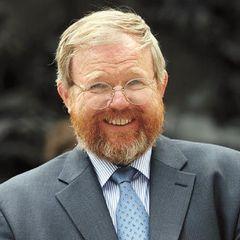
Bill Bryson
Bill Bryson

Bill Bryson, born on December 8, 1951, is a British author known for his humorous and knowledgeable writing. His works span across various fields, including travel literature, natural history, and science popularization. more

You May Also Like

“Nor did she understand the attitude of the armed forces, most of whom came from the middle and working class and had traditionally been closer to the left than to the far right. She did not understand the state of civil war, nor did she realize that war is the soldiers’ work of art, the culmination of all their training, the gold medal of their profession. Soldiers are not made to shine in times of peace. The coup gave them a chance to put into practice what they had learned in their barracks: blind obedience, the use of arms, and other skills that soldiers can master once they silence the scruples of their hearts.”

“[Historian] Kevin Starr has written that "the San Diego free speech battles revealed the depths of reaction possible in the threatened middle- and lower-middle classes of California." He argues that vigilantes were recruited from an anxious petty bourgeoisie, "who were uncertain and insecure in what they had gained or thought they had gained by coming to California." As in late Weimar Germany, "the oligarchy, which is to say, the upper-middle and upper classes, loathed and feared the [Industrial Workers of the World]; but oligarchs did not take to the streets as vigilantes. They did, however, encourage the lower-middle classes to do such work.”

“As [President Thomas] Jefferson realized, with no government interference by setting the rules of the game of business and fair taxation, there could be no broad middle class—maybe a sliver of small businesses and artisans, but the vast majority of us would be the working poor under the yolk [sic] of elites. The Economic Royalists know this, which gets to the root of why they set out to destroy government's involvement in the economy. After all, in a middle-class economy, they may have to give up some of their power, and some of the higher end of their wealth may even be "redistributed"—horror of horrors—for schools, parks, libraries, and other things that support a healthy middle-class society but are not needed by the rich.... As Jefferson laid out in an 1816 letter...a totally "free" market, where corporations reign supreme just like the oppressive governments of old, could transform America 'until the bulk of the society is reduced to mere automatons of misery, to have no sensibilities left but for sinning and suffering. Then begins, indeed, the bellum omnium in omnia, which some philosophers observing to be so general in this world, have mistaken it for the natural, instead of the abusive state of man.”

“With the help of prominent media outlets, the Royalists, now a political minority, would engage in a scorched-earth strategy to defeat a coming Progressive Revolution, even if it meant crashing the United States as we know it. If they were going down, then the rest of the nation was going down with them. Which is exactly what happened.”

“What you read at Columbia is Plato's Republic and Homer's Iliad. What you learn at Columbia is that reading isn't education. Education is figuring out the hard way that at a school like Columbia, what you read isn't nearly as important as what you wear, how you look, and how much you know about sucking up to professors who really couldn't give a shit about whether some nameless, faceless kid in the 23rd row will work or starve after graduation.”