Quotessence
Home / Quotes / Quote by Joseph Campbell

Quote by Joseph Campbell

“All of the great mythologies and much of the mythic story-telling of the world are from the male point of view. When I was writing The Hero with a Thousand Faces and wanted to bring female heroes in, I had to go to the fairy tales. These were told by women to children, you know, and you get a different perspective. It was the men who got involved in spinning most of the great myths. The women were too busy; they had too damn much to do to sit around thinking about stories. [...] In the Odyssey, you'll see three journeys. One is that of Telemachus, the son, going in quest of his father. The second is that of the father, Odysseus, becoming reconciled and related to the female principle in the sense of male-female relationship, rather than the male mastery of the female that was at the center of the Iliad. And the third is of Penelope herself, whose journey is [...] endurance. Out in Nantucket, you see all those cottages with the widow's walk up on the roof: when my husband comes back from the sea. Two journeys through space and one through time.”

Quote by Joseph Campbell

Author
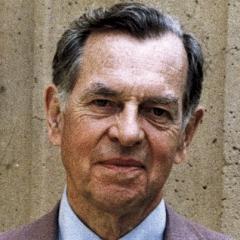
Joseph Campbell
Joseph Campbell

Joseph Campbell was an American writer, scholar, and mythologist, renowned for his studies of world mythology. His work, 'The Hero with a Thousand Faces', has had a profound impact on modern culture, widely used in literature, film, and psychology fields. more

You May Also Like

“It is not then the existence or the non-existence, of the persons that I trouble myself about; it is the fable of Jesus Christ, as told in the New Testament, and the wild and visionary doctrine raised thereon, against which I contend. The story, taking it as it is told, is blasphemously obscene. It gives an account of a young woman engaged to be married, and while under this engagement, she is, to speak plain language, debauched by a ghost.”

“Eros mumbled something. "I'm sorry?" said Aphrodite. "Whatwouldjesusdo." "What would Jesus do?" said Aphrodite. "Let me tell you something. Jesus was a very good boy. He would do exactly what his mother told him to." "But-" "Jesus was supposed to be a god, right?" said Aphrodite. "Ergo, he did revenge. All gods do revenge." "Not exactly. He said you should turn the other-" "What else does your Jesus say?" Aphrodite interrupted. "I thought you didn't care." "Let me see," said Aphrodite. "I remember. 'Honour thy father and mother'." "One, that wasn't Jesus. And two, it's hard to honour your father when there are so many candidates for who he might be." "That's not very nice," said Aphrodite. "You know who your father is. It's your cousin Ares." [...] "I wish the Virgin Mary was my mother," grumbled Eros eventually.”

“An interesting contrast between the geology of the present day and that of half a century ago, is presented by the complete emancipation of the modern geologist from the controlling and perverting influence of theology, all-powerful at the earlier date. As the geologist of my young days wrote, he had one eye upon fact, and the other on Genesis; at present, he wisely keeps both eyes on fact, and ignores the pentateuchal mythology altogether. The publication of the 'Principles of Geology' brought upon its illustrious author a period of social ostracism; the instruction given to our children is based upon those principles. Whewell had the courage to attack Lyell's fundamental assumption (which surely is a dictate of common sense) that we ought to exhaust known causes before seeking for the explanation of geological phenomena in causes of which we have no experience.”