Quotessence
Home / Quotes / Quote by Stefan Zweig

Quote by Stefan Zweig

Work

Letter from an Unknown Woman and Other Stories

Browse quotes and source details for this work. more

Author
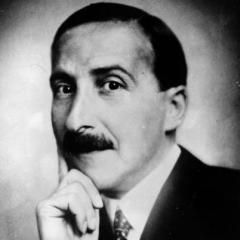
Stefan Zweig
Stefan Zweig

Stefan Zweig, born on November 28, 1881 in Vienna, was an Austrian novelist, playwright, and biographer. Known for his profound psychological insights and unique narrative style, he is a significant figure in European literature at the beginning of the 20th century. more

You May Also Like

“With school turning out more runners, jumpers, racers, tinkerers, grabbers, snatchers, fliers, and swimmers instead of examiners, critics, knowers, and imaginative creators, the word 'intellectual,' of course, became the swear word it deserved to be. You always dread the unfamiliar. Surely you remember the boy in your own school class who was exceptionally ‘bright,’ did most of the reciting and answering while the others sat like so many leaden idols, hating him. And wasn’t it this bright boy you selected for beatings and tortures after hours? Of course it was. We must all be alike. Not everyone born free and equal, as the Constitution says, but everyone made equal. Each man the image of every other; then all are happy, for there are no mountains to make them cower, to judge themselves against. So! A book is a loaded gun in the house next door. Burn it. Take the shot from the weapon. Breach man's mind. Who knows who might be the target of the well-read man? Me? I won't stomach them for a minute.”

“That, in my opinion, was the most diabolical aspect of those old-time big brains: They would tell their owners, in effect, 'Here is a crazy thing we could actually do, probably, but we would never do it, of course. It's just fun to think about.' And then, as though in trances, the people would really do it--have slaves fight each other to death in the Colosseum, or burn people alive in the public square for holding opinions which were locally unpopular, or build factories whose only purpose was to kill people in industrial quantities, or to blow up whole cities, and on and on.”

“I dislike interaction. The less I say the better I feel. I was naturally a loner. I didn’t want conversation, or to goanywhere. I didn’t understand other people who wanted to share their emotions. Parties sickened me. I was drawn to all the wrong things: I was lazy , I didn’t have a god, politics, ideas, ideals. I was settled into nothingness; a kind of non - being, and I accepted it. I didn’t make for an interesting person. I didn’t want to be interesting, it was too hard. What I really wanted was only a soft, hazy space to live in, and to be left alone. Relationships never worked with me. I alwayslost interest. I simply disliked people, crowds, anywhere, except at my readings.”

“Heresy is the eternal dawn, the morning star, the glittering herald of the day. Heresy is the last and best thought. It is the perpetual New World, the unknown sea, toward which the brave all sail. It is the eternal horizon of progress. Heresy extends the hospitalities of the brain to a new thought. Heresy is a cradle; orthodoxy, a coffin.”

“ABNORMAL, adj. Not conforming to standards in matters of thought and conduct. To be independent is to be abnormal, to be abnormal is to be detested. A striving toward the straiter [sic] resemblance of the Average Man than he hath to himself, whoso attaineth thereto shall have peace, the prospect of death and the hope of Hell.”