Quotessence
Home / Quotes / Quote by Victor Hugo

Quote by Victor Hugo

Work

Ninety-three

The novel depicts the intense civil strife of the French Revolutionary period known as the Reign of Terror, when the revolutionary government confronted internal rebellion and external military threats. The narrative centers on military and political struggles in the Vendée region of western France, where royalist insurrectionists opposed the revolutionary regime. The work explores themes of duty, honor, and the moral complexities of civil war, presenting characters on opposing sides of the conflict with dramatic intensity. The title refers to the year 1793, a pivotal moment in French history when the revolution reached its most radical phase and the republic faced existential challenges from both domestic uprising and foreign invasion. more
Author

Victor Hugo
Victor Hugo

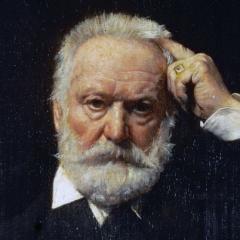
Victor Hugo, a French romantic poet, novelist, and playwright, was born on February 26, 1802, and died on May 22, 1885. He is considered one of the greatest writers in French literary history, known for his profound humanistic concerns and rich imagination. more

You May Also Like

“Yet in another and still more definite sense despair is the sickness unto death. It is indeed very far from being true that, literally understood, one dies of this sickness, or that this sickness ends with bodily death. On the contrary, the torment of despair is precisely this, not to be able to die So it has much in common with the situation of the moribund when he lies and struggles with death, and cannot die. So to be sick unto death is, not to be able to die -- yet not as though there were hope of life; no the hopelessness in this case is that even the last hope, death, is not available. When death is the greatest danger, one hopes for life; but when one becomes acquainted with an even more dreadful danger, one hopes for death. So when the danger is so great that death has become one’s hope, despair is the disconsolateness of not being able to die.”

“Alice leaned first one way and then the other, down the line of children. She said, Is everybody understanding this?" One child said, "The misuse of power is the root of all evil?" Alice said, "Well...." Another child said, "There is no justice on the earth?" Alice said, "Well..." Another child said, "We are all alone in the world?" Alice said, "Well..." Another child said, "The greatest depth of our loss is the beginning of true freedom?" Alice said, "Well..." Another child said, "The disposal of human waste is the responsibility of the brokenhearted?" These were all phrases Alice had put on the chalkboard after other field trips. It occurred to Alice, hearing these phrases now, that she might have attempted to do too much with a class of fourth graders. She was willing to admit to some excesses. Alice said, "Just listen.”

“When reading the history of the Jewish people, of their flight from slavery to death, of their exchange of tyrants, I must confess that my sympathies are all aroused in their behalf. They were cheated, deceived and abused. Their god was quick-tempered unreasonable, cruel, revengeful and dishonest. He was always promising but never performed. He wasted time in ceremony and childish detail, and in the exaggeration of what he had done. It is impossible for me to conceive of a character more utterly detestable than that of the Hebrew god. He had solemnly promised the Jews that he would take them from Egypt to a land flowing with milk and honey. He had led them to believe that in a little while their troubles would be over, and that they would soon in the land of Canaan, surrounded by their wives and little ones, forget the stripes and tears of Egypt. After promising the poor wanderers again and again that he would lead them in safety to the promised land of joy and plenty, this God, forgetting every promise, said to the wretches in his power:—'Your carcasses shall fall in this wilderness and your children shall wander until your carcasses be wasted.' This curse was the conclusion of the whole matter. Into this dust of death and night faded all the promises of God. Into this rottenness of wandering despair fell all the dreams of liberty and home. Millions of corpses were left to rot in the desert, and each one certified to the dishonesty of Jehovah. I cannot believe these things. They are so cruel and heartless, that my blood is chilled and my sense of justice shocked. A book that is equally abhorrent to my head and heart, cannot be accepted as a revelation from God. When we think of the poor Jews, destroyed, murdered, bitten by serpents, visited by plagues, decimated by famine, butchered by each, other, swallowed by the earth, frightened, cursed, starved, deceived, robbed and outraged, how thankful we should be that we are not the chosen people of God. No wonder that they longed for the slavery of Egypt, and remembered with sorrow the unhappy day when they exchanged masters. Compared with Jehovah, Pharaoh was a benefactor, and the tyranny of Egypt was freedom to those who suffered the liberty of God. While reading the Pentateuch, I am filled with indignation, pity and horror. Nothing can be sadder than the history of the starved and frightened wretches who wandered over the desolate crags and sands of wilderness and desert, the prey of famine, sword, and plague. Ignorant and superstitious to the last degree, governed by falsehood, plundered by hypocrisy, they were the sport of priests, and the food of fear. God was their greatest enemy, and death their only friend. It is impossible to conceive of a more thoroughly despicable, hateful, and arrogant being, than the Jewish god. He is without a redeeming feature. In the mythology of the world he has no parallel. He, only, is never touched by agony and tears. He delights only in blood and pain. Human affections are naught to him. He cares neither for love nor music, beauty nor joy. A false friend, an unjust judge, a braggart, hypocrite, and tyrant, sincere in hatred, jealous, vain, and revengeful, false in promise, honest in curse, suspicious, ignorant, and changeable, infamous and hideous:—such is the God of the Pentateuch.”