Quotessence
Home / Quotes / Quote by Edgar Allan Poe

Quote by Edgar Allan Poe

“I AM come of a race noted for vigor of fancy and ardor of passion. Men have called me mad; but the question is not yet settled, whether madness is or is not the loftiest intelligence--whether much that is glorious--whether all that is profound--does not spring from disease of thought--from moods of mind exalted at the expense of the general intellect. They who dream by day are cognizant of many things which escape those who dream only by night. In their gray visions they obtain glimpses of eternity, and thrill, in waking, to find that they have been upon the verge of the great secret. In snatches, they learn something of the wisdom which is of good, and more of the mere knowledge which is of evil. They penetrate, however, rudderless or compassless into the vast ocean of the "light ineffable", and again, like the adventures of the Nubian geographer, "agressi sunt mare tenebrarum, quid in eo esset exploraturi". We will say then, that I am mad.”

Quote by Edgar Allan Poe

Work

Eleonora

Browse quotes and source details for this work. more

Author

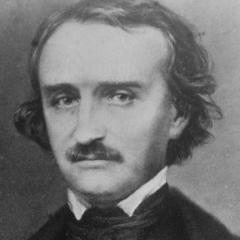
Edgar Allan Poe
Edgar Allan Poe

American author, poet, editor, and literary critic. Known for his short stories and poetry, particularly his works of horror and mystery. His most famous works include 'The Black Cat', 'The Raven', and 'Annabel Lee'. more

You May Also Like

“I finally gave in today. Admitting that I haven't been able to do it alone, that's defeat right? But do a couple pills change why I'm here? Will my spirit be altered? Do my passions change? Will I lose hope either way? My madness is what makes me. It’s my most unique beauty.”

“The origin of illness may be in the past, but the virulent crisis must be dynamically tackled. I believe in attacking the core of the illness, through its present symptoms, quickly, directly. The past is a labyrinth. One does not have to step into it and move step by step through every turn and twist. The past reveals itself instantly, in today’s fever or abscess of the soul.”

“I don't think I could ever see her closely," the sentinel replied, "however close she came." His own voice was hushed and regretful, echoing with lost chances. "She has a newness," he said. "Everything is for the first time. See how she moves, how she walks, how she turns her head -- all for the first time, the first time anyone has ever done these things. See how she draws her breath and lets it go again, as though no one else in the world knew that air was good. It is all for her. If I learned that she had been born this very morning, I would only be surprised that she was so old." The second sentinel stared down from his tower at the three wanderers. The tall man saw him first, and next the dour woman. Their eyes reflected nothing but his armor, grim and cankered and empty. But then the girl in the ruined black cloak raised her head, and he stepped back from the parapet, putting out one tin glove against her glance. In a moment she passed into the shadow of the castle with her companions, and he lowered his hand. "She may be mad," he said calmly. "No grown girl looks like that unless she is mad. That would be annoying, but far preferable to the remaining possibility." "Which is?" the younger man prompted after a silence. "Which is that she was indeed born this morning. I would rather that she were mad.”

“Tomorrow at seven o'clock a strange phenomenon will occur: the earth is going to sit on the moon. This has also been written about by the noted English chemist Wellington. I confess, I felt troubled at heart when I pictured to myself the extraordinary delicacy and fragility of the moon. For the moon is usually made in Hamburg, and made quite poorly. I'm surprised England doesn't pay attention to this. It's made by a lame cooper, and one can see that the fool understands nothing about the moon. He used tarred rope and a quantity of cheap olive oil, and that's why there's a terrible stench all over the earth, so that you have to hold your nose. And that's why the moon itself is such a delicate sphere that people can't live on it, and now only noses live there. And for the same reason, we can't see our own noses, for they're all in the moon.”