Quotessence
Home / Quotes / Quote by Erich Fromm

Quote by Erich Fromm

“Es preciso pasar por toda una serie de experiencias de amor fallidas para no buscar inconscientemente en la pareja un eco del amor materno y paterno. Este tardío proceso de desvinculación del amor materno y paterno suele ir acompañado de dolorosas experiencias de renuncia y pérdida. Quien decide resolver un problema mediante el amor ha de tener valor suficiente para superar los desengaños y permanecer paciente a pesar de los reveses.”

Quote by Erich Fromm

Work

THE ART OF LOVING

This book explores the complexities of love, offering insights into its nature, dynamics, and importance in human life. It delves into the psychological and emotional aspects of love, providing readers with tools and strategies to cultivate healthy and fulfilling relationships. more

Author

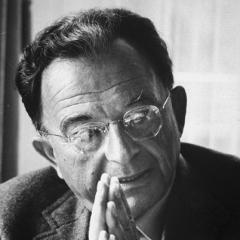
Erich Fromm
Erich Fromm

Erich Fromm, born on March 23, 1900 in Germany and died on March 18, 1980, was a renowned psychologist. His research covered a wide range of fields including anthropology, philosophy, and religion, particularly known for his studies on human psychology and interpersonal relationships. more

You May Also Like

“In the Judeo-Christian tradition, we carry forward the basic insight our fundamental relationship to the world is one of love. Christians say that “God is Love,” that God created the universe out of love. The source of God’s Creation is love, and our relationship to the possibility of meaning within this created world is in and through love. The Christian community is a reciprocal relationship among subjects who love and are loved. The subject maintains the meaning of God’s Creation by taking up a Christ-like love toward others. The appearance of meaning in the world—love’s product—is always a manifestation of the divine. Liberalism turns away from this entire tradition of thought, in party because of its association with religion, and in part because this tradition resists the analytic form of reason. For liberalism, religion is individualized and privatized, and thus it cannot be used in the explanation or justification of a public space. If it does invade the public, it threatens irrationality. But religion is no less an effort to understand the character of our experience, and even a secular philosophy must not ignore that experience. We cannot simply deny what we cannot place within our categories of analysis. (221)”