Quotessence
Home / Quotes / Quote by Mary Wollstonecraft Shelley

Quote by Mary Wollstonecraft Shelley

Work

Frankenstein: The 1818 Text

Browse quotes and source details for this work. more

Author
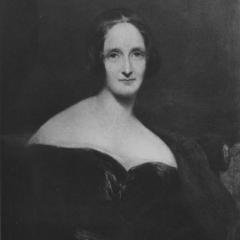
Mary Wollstonecraft Shelley

Mary Wollstonecraft Shelley was an English novelist best known for her famous work, 'Frankenstein'. Born on August 30, 1797, and passing away on February 1, 1851, she was an early female writer whose works explored themes such as women's rights, social inequalities, and scientific ethics. more

You May Also Like

“Such, nearly, was the state of the French theatre before the appearance of Voltaire. His knowledge of the Greeks was very limited, although he now and then spoke of them with enthusiasm, in order, on other occasions, to rank them below the more modern masters of his own nation, including himself still, he always felt himself bound to preach up the grand severity and simplicity of the Greeks as essential to Tragedy. He censured the deviations of his predecessors therefrom as mistakes, and insisted on purifying and at the same time enlarging the stage, as, in his opinion, from the constraint of court manners, it had been almost straitened to the dimensions of an antechamber. He at first spoke of Shakspeare's bursts of genius, and borrowed many things from this poet, at that time altogether unknown to his countrymen; he insisted, too, on greater depth in the delineation of passion—on a stronger theatrical effect; he called for a scene more majestically ornamented; and, lastly, he frequently endeavoured to give to his pieces a political or philosophical interest altogether foreign to poetry. His labours hare unquestionably been of utility to the French stage, although in language and versification (which in the classification of dramatic excellences ought only to hold a secondary place, though in France they alone almost decide the fate of a piece), he is, by most critics, considered inferior to his predecessors, or at least to Racine. It is now the fashion to attack this idol of a bygone generation on every point, and with the most unrelenting and partial hostility. His innovations on the stage are therefore cried down as so many literary heresies, even by watchmen of the critical Zion, who seem to think that the age of Louis XIV. has left nothing for all succeeding time, to the end of the world, but a passive admiration of its perfections, without a presumptuous thought of making improvements of its own. For authority is avowed with so little disguise as the first principle of the French critics, that this expression of literary heresy is quite current with them.”

“I boiled potatoes until they were hot and fluffy... ... and then kneaded in diced mushrooms, which are fibrous and soak up fat easily. Then I wrapped the whole mixture up in thick-cut bacon and set it to roast! The heat caused the fat to render out of the bacon, leaving its crispy and crunchy... ... while the potatoes soaked up every last drop of the savory pork fat! Crispy on the outside... ... juicy on the inside. Together they create a savory and sensual taste experience!”

“Without being fully aware of what I was doing, I flipped the lights on in my kitchen and began to measure out chicken stock and arborio rice. The butternut squash in my pantry found itself quartered and set to roast in the oven. I plucked a few leaves of sage from my kitchen herb garden and minced them fine. Butter, shallots, rice, and herbs. Roasted squash and parmesan. The risotto took shape, its savory scent filling my apartment.”