Quotessence
Home / Quotes / Quote by Felix Adler

Quote by Felix Adler

“[His research into biblical criticism had lead him to the conclusion that most of what was contained in traditional religion simply wasn't true] Was I to lie in order to teach the truth? ...Was I to repeat these words? It was impossible. It was certain they would stick in my throat. On these grounds the separation was decided by me.”

Quote by Felix Adler

Author
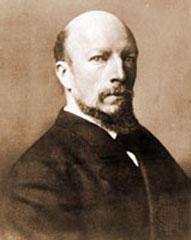
Felix Adler
Felix Adler

Felix Adler, born on August 13, 1851 in Germany and died on April 24, 1933 in the United States, was an American sociologist and philosopher, known as a pioneer of the American social service movement. He is renowned for his contributions to charity, social justice, and human welfare. more

You May Also Like

“Anishanaabeg women hunted, trapped, fished, held leadership positions, and engaged in warfare as well as engaged in domestic affairs and looked after children. They were encouraged to show a broad range of emotions, and express their gender and sexuality in a way that was true to their own being, as a matter of both principle and survival. Anishinaabeg men hunted, trapped, fished, held leadership positions, engaged in warfare, and also knew how to cook, sew, and look after children. They were encouraged to show a broad range of emotions, and express their gender and sexuality in a way that was true to their own being, as a matter of both principle and survival. This is true for other genders as well. The degree to which individuals engaged in each of these activities depended on their name, clan, extended family, skill, interest, and most important, individual self-determination or agency. Agency was valued, honored, and respected, because it produced a diversity of highly self-sufficient individuals, families, and communities. This diversity of highly self-sufficient and self-determining people ensured survival and resilience that enabled the community to withstand difficult circumstances. Not Murdered and Not Missing: Rebelling against Colonial Gender Violence. March 15, 2014. Nations Rising. Thanks to Miigwech/Nia:wen/Mahsi Cho, Tara Williamson, Melody McKiver, Jessica Danforth, Glen Coulthard, and Jarrett Martineau.”

“The problem with racial discrimination, though, is not the inference of a person's race from their genetic characteristics. It is quite the opposite: it is the inference of a person's characteristics from their race. The question is not, can you, given an individual's skin color, hair texture, or language, infer something about their ancestry or origin. That is a question of biological systematics -- of lineage, taxonomy, of racial geography, of biological discrimination. Of course you can -- and genomics as vastly refined that inference. You can scan any individual genome and infer rather deep insights about a person's ancestry, or place of origin. But the vastly more controversial question is the converse: Given a racial identity -- African or Asian, say -- can you infer anything about an individual's characteristics: not just skin or hair color, but more complex features, such as intelligence, habits, personality, and aptitude? /I/ Genes can certainly tell us about race, but can race tell us anything about genes? /i/ To answer this question, we need to measure how genetic variation is distributed across various racial categories. Is there more diversity _within_ races or _between_ races? Does knowing that someone is of African versus European descent, say, allow us to refine our understanding of their genetic traits, or their personal, physical, or intellectual attributes in a meaningful manner? Or is there so much variation within Africans and Europeans that _intraracial_ diversity dominates the comparison, thereby making the category "African" or "European" moot? We now know precise and quantitative answers to these questions. A number of studies have tried to quantify the level of genetic diversity of the human genome. The most recent estimates suggest that the vast proportion of genetic diversity (85 to 90 percent) occurs _within_ so-called races (i.e., within Asians or Africans) and only a minor proportion (7 percent) within racial groups (the geneticist Richard Lewontin had estimated a similar distribution as early as 1972). Some genes certainly vary sharply between racial or ethnic groups -- sickle-cell anemia is an Afro-Caribbean and Indian disease, and Tay-Sachs disease has a much higher frequency in Ashkenazi Jews -- but for the most part, the genetic diversity within any racial group dominates the diversity between racial groups -- not marginally, but by an enormous amount. The degree of interracial variability makes "race" a poor surrogate for nearly any feature: in a genetic sense, an African man from Nigria is so "different" from another man from Namibia that it makes little sense to lump them into the same category.”

“The rationale seems to be that we keep people as victims by validating them, empathizing with them, and fighting alongside them for equality and the dignity they deserve. I don’t think people are kept down by that. I believe what keeps people down is the constant dismissal of their pain, the degradation, the humiliation, the fear of injustice, and the continuous crushing of their will, their faith, and their hope. This type of oppression kills the self-esteem people need to empower themselves, and it's flat-out terrorism.”