Quotessence
Home / Quotes / Quote by Kurt Vonnegut

Quote by Kurt Vonnegut

“Painters--and storytellers, including poets and playwrights and historians, they are the justices of the Supreme Court of Good and Evil, of which I am now a member, and to which you may belong someday!”
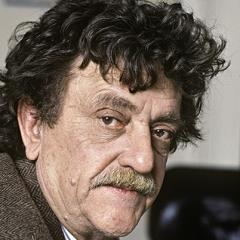
Quote by Kurt Vonnegut

Work

Bluebeard

This enduring story explores themes of jealousy, betrayal, and the dark side of human nature. The tale is often interpreted as a cautionary tale about the dangers of secrecy and the consequences of forbidden desires. more

Author

Kurt Vonnegut
Kurt Vonnegut

Kurt Vonnegut was an American writer known for his unique humor and profound satire. His works often explore themes of war, humanity, society, and politics. His most famous works include 'Slaughterhouse-Five' and 'Cat's Cradle'. His writing style has been widely appreciated by readers and has had a profound impact on literature. more

You May Also Like

“Hope is not always an organic emotion. Sometimes we have to consciously find it and consciously summon it. And, yes, there are big challenges right now. Maybe those challenges are insurmountable. Maybe we will be, because of social media, incapable of restoring our capacity to have a national dialogue. Maybe because of the culture that we live in right now, we will no longer be able to have conversations across disagreement. Maybe because of unchecked wealth and corporate power, we won’t be able to conquer climate change. The list goes on. Maybe. But we would be the first generation of Americans to give up on this country, and we would be the first generation of Americans who were unable to find the path forward. And I just don’t believe that we are. And I certainly believe that we don’t have to be.”

“There are certain men who are sacrosanct in history; you touch on the truth of them at your peril. These are such men as Socrates and Plato, Pericles and Alexander, Caesar and Augustus, Marcus Aurelius and Trajan, Martel and Charlemagne, Edward the Confessor and William of Falaise, St. Louis and Richard and Tancred, Erasmus and Bacon, Galileo and Newton, Voltaire and Rousseau, Harvey and Darwin, Nelson and Wellington. In America, Penn and Franklin, Jefferson and Jackson and Lee. There are men better than these who are not sacrosanct, who may be challenged freely. But these men may not be. Albert Pike has been elevated to this sacrosanct company, though of course to a minor rank. To challenge his rank is to be overwhelmed by a torrent of abuse, and we challenge him completely. Looks are important to these elevated. Albert Pike looked like Michelangelo's Moses in contrived frontier costume. Who could distrust that big man with the great beard and flowing hair and godly glance? If you dislike the man and the type, then he was pompous, empty, provincial and temporal, dishonest, and murderous. But if you like the man and the type, then he was impressive, untrammeled, a man of the right place and moment, flexible or sophisticated, and firm. These are the two sides of the same handful of coins. He stole (diverted) Indian funds and used them to bribe doubtful Indian leaders. He ordered massacres of women and children (exemplary punitive operations). He lied like a trooper (he was a trooper). He effected assassinations (removal of semi-military obstructions). He forged names to treaties (astute frontier politics). He was part of a weird plot by men of both the North and South to extinguish the Indians whoever should win the war (devotion to the ideal of national growth ) . He personally arranged twelve separate civil wars among the Indians (the removal of the unfit) . After all, those were war years; and he did look like Moses, and perhaps he sounded like him.”

“The world is what the individual makes it. A world of individuals is the intersubjective, collective mind field of all those individuals. Standing on the ground of freedom, we can see things afresh, enter relationships renewed and with a new purpose of sharing freedom and happiness. We can become poets and seers of reality. We can become great adepts, true individuals, agents of compassion. To live in a world is to be constantly creating that world. (p. 215)”