Quotessence
Home / Quotes / Quote by Atul Gawande

Quote by Atul Gawande

“We want autonomy for ourselves and safety for those we love. That remains the main problem and paradox for the frail. Many of the things that we want for those we care about are things that we would adamantly oppose for ourselves because they would infringe upon our sense of self.”

Quote by Atul Gawande

Author
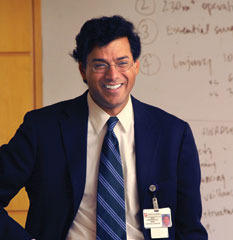
Atul Gawande
Atul Gawande

Atul Gawande is a renowned American surgeon and writer. Born on November 5, 1965, in Mumbai, India, he immigrated to the United States. Gawande is known for his expertise in surgery and his profound insights into the healthcare system. His writings cover a range of topics from surgical techniques to medical ethics, and have been well-received by readers. more

You May Also Like

“It is mainly by resisting authority that the individual defines himself. This is why authorities--whether parental, priestly, political, or psychiatric--must be careful how and where they assert themselves; for while it is true that the more they assert themselves the more they govern, it is also true that the more they assert themselves the more opportunities they offer for being successfully denied.”

“Cognitive science has something of enormous importance to contribute to human freedom: the ability to learn what our unconscious conceptual systems are like and how our cognitive unconscious functions. If we do not realize that most of our thought is unconscious and that we think metaphorically, we will indeed be slaves to the cognitive unconscious. Paradoxically, the assumption that we have a radically autonomous rationality as traditionally conceived actually limits our rational autonomy. It condemns us to cognitive slavery - to an unaware and uncritical dependence on our unconscious metaphors. To maximize what conceptual freedom we can have, we must be able to see through and move beyond philosophies that deny the existence of an embodied cognitive unconscious that governs most of our mental lives.”

“Para ti, a vida tem de ser obrigatoriamente um cenário de mudança e distracção constante, caso contrário, o mundo é uma masmorra: tens de ser admirada, tens de ser cortejada, tens de ser bajulada… tens de ter música, tens de ter bailes, tens de ter companhia… caso contrário, definhas e morres. Será possível que não consigas arranjar maneira de te tornares independente de todas as iniciativas e de todas as vontades para além das que provêm de ti própria? Pega num dia, divide-o em partes, atribui a cada parte uma determinada tarefa; não deixes nem um quarto de hora, nem dez, nem cinco minutos que sejam por preencher, ocupa a totalidade do tempo; desempenha cada tarefa com método, com uma regularidade inflexível. O dia chegará ao fim quase sem dares por isso e não ficarás em dívida para com ninguém por te ter ajudado a livrares-te dum momento de ócio, não te verás obrigada a procurar companhia, a conversa, a simpatia, a tolerância de ninguém; viveste, em resumo, como qualquer criatura independente deve viver. (p.309)”

“There are Tantrics who deliberately break taboos and social norms and then there are other Tantrics who, by means of their practices and the way that they practice, that to society in general, it may have the appearance of breaking social norms but in fact that is just the manifestation of the progress of their practice.”

“You made me laugh at your jokes. You made me cry at your criticism. You made me shout at your lies. Then I noticed how in every case someone else was present, hearing you without laughter or tears or anger. I alone reacted. I see now; you never made me laugh or cry or rage. I chose to find humor. I chose to take offense. I chose to feel scorned. The truth is, you never had power over me.”