Quotessence
Home / Quotes / Quote by Aldous Huxley

Quote by Aldous Huxley

Work

Ends and Means

Browse quotes and source details for this work. more
Author

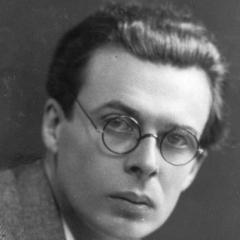
Aldous Huxley
Aldous Huxley

Aldous Huxley was an English writer and philosopher, renowned for his dystopian novel 'Brave New World'. Born on July 26, 1894, in Godalming, Surrey, England, he was the younger brother of the poet and critic Leonard Huxley. Huxley's works frequently delved into the interplay of science, politics, and philosophy, and he was a prominent figure in the literary movement known as the 'Lost Generation'. He passed away on November 22, 1963. more

You May Also Like

“Courage is not always found in grand and dramatic gestures or jaw-dropping feats. It is the grassrootsy, unassuming brand of bravery that should not be underestimated.”

“A soul mate is someone to whom we feel profoundly connected, as though the communicating and communing that takes place between us were not the product of intentional efforts, but rather a divine grace. This kind of relationship is so important to the soul that many have said there is nothing more precious in life. We may find a soul partner in many different forms of relationship- in friendship, marriage, work, play, and family. It is a rare form of intimacy but is not limited to one person or to one form.”

“The word for intellect in the Arabic language is 'aql; it can be defined in a number of ways, including reason, understanding, comprehension, discernment, insight, rationality, mind, or intellect. This is the instinctive faculty given to humans by Allah (سبحانه وتعالى), by which we comprehend the reality of our existence and this world.”

“The choices that we make will be reflected in our behaviour, thoughts, and emotions. This verse suggests that it is possible for the personality of an individual to be changed or adapted, preferably towards the path of goodness. Human beings are not simply 'victims' of genes or environment, but instead are freely acting agents who can choose to develop our full potential.”

“At least 250 different systems of psychotherapy have been noted to exist, with possibly up to more than four hundred. Most psychotherapists do not adhere strictly to one single school of thought; instead they take an eclectic approach, in which they select from the variety of techniques those that are likely to be the most appropriate and effective for a particular client.”

“Hamdan has also outlined several beneficial cognitions from the Islamic tradition that may be integrated into the psychotherapeutic process with religious patients. These include the following: 1. Understanding the temporal reality of this world, 2. Focusing on the hereafter, 3. Recalling the purpose and effects of distress and afflictions, 4. Trusting and relying upon Allah (سبحانه وتعالى), and 5. Focusing on the blessings of Allah (سبحانه وتعالى).”