Quotessence
Home / Quotes / Quote by Joseph Heller

Quote by Joseph Heller

“His heart cracked, and he fell in love. He wondered if she would marry him. “Tu sei pazzo,” she told him with a pleasant laugh. “Why am I crazy?” he asked. “Perché non posso sposare.” “Why can’t you get married?” “Because I am not a virgin,” she answered. “What has that got to do with it?” “Who will marry me? No one wants a girl who is not a virgin.” “I will. I’ll marry you.” “Ma non posso sposarti.” “Why can’t you marry me?” “Perché sei pazzo.” “Why am I crazy?” “Perché vuoi sposarmi.” Yossarian wrinkled his forehead with quizzical amusement. “You won’t marry me because I’m crazy, and you say I’m crazy because I want to marry you? Is that right?” “Si.” “Tu sei pazz’!” he told her loudly. “Perché?” she shouted back at him indignantly, her unavoidable round breasts rising and falling in a saucy huff beneath the pink chemise as she sat up in bed indignantly. “Why am I crazy?” “Because you won’t marry me.” “Stupido!” she shouted back at him, and smacked him loudly and flamboyantly on the chest with the back of her hand. “Non posso sposarti! Non capisci? Non posso sposarti.” “Oh, sure, I understand. And why can’t you marry me?” “Perché sei pazzo!” “And why am I crazy?” “Perché vuoi sposarmi.” “Because I want to marry you. Carina, ti amo,” he explained, and he drew her gently back down to the pillow. “Ti amo molto.” “Tu sei pazzo,” she murmured in reply, flattered. “Perché?” “Because you say you love me. How can you love a girl who is not a virgin?” “Because I can’t marry you.” She bolted right up again in a threatening rage. “Why can’t you marry me?” she demanded, ready to clout him again if he gave an uncomplimentary reply. “Just because I am not a virgin?” “No, no, darling. Because you’re crazy.”

Quote by Joseph Heller

Work

Catch-22

Browse quotes and source details for this work. more

Author

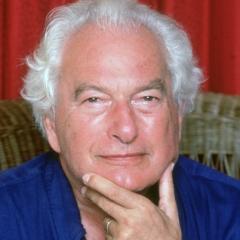
Joseph Heller
Joseph Heller

Joseph Heller was an American novelist known for his satirical and black humor style. His novel 'Catch-22' is considered one of the greatest novels of the 20th century and has had a profound impact on literature. more

You May Also Like

“The importance of falling in love lies not in how it feels, but in what it perceives. And as always with our feelings, the key moral issue is how truthful the perception is... Falling in love is a sign that this might be someone with whom you could make a good marriage. Still, it's not enough, because the feeling is not always as perceptive as it should be... So falling in love is not the basis for a good marriage. It's not even a requirement. Marriage does not depend on falling in love; it depends on the promises you make to each other in your wedding vows and then spend a lifetime keeping. As many people have pointed out, you can't promise how you'll feel. But you can promise to cultivate a virtue, such as the virtue of love.”

“Edna felt depressed rather than soothed after leaving them. The little glimpse of domestic harmony which had been offered her, gave her no regret, no longing. It was not a condition of life which fitted her, and she could see in it but an apalling and hopeless ennui. She was moved by a kind of commiseration for Madame Ratignolle, - a pity for that colorless existence which never uplifted its possessor beyond the region of blind contentment, in which no moment of anguish ever visited her soul, in which she would never have the taste of life's delirium. Edna vaguely wondered what she meant by "life's delirium." It had crossed her thought like some unsought, extraneous impression.”

“It was a fact generally acknowledged by all but the most contumacious spirits at the beginning of the seventeenth century that woman was the weaker vessel; weaker than man, that is. ... That was the way God had arranged Creation, sanctified in the words of the Apostle. ... Under the common law of England at the accession of King James I, no female had any rights at all (if some were allowed by custom). As an unmarried woman her rights were swallowed up in her father's, and she was his to dispose of in marriage at will. Once she was married her property became absolutely that of her husband. What of those who did not marry? Common law met that problem blandly by not recognizing it. In the words of The Lawes Resolutions [the leading 17th century compendium on women's legal status]: 'All of them are understood either married or to be married.' In 1603 England, in short, still lived in a world governed by feudal law, where a wife passed from the guardianship of her father to her husband; her husband also stood in relation to her as a feudal lord.”

“Of course, it is quite possible to be in the dark in the dark, but there are so many secrets in the world that it is likely that you are always in the dark about one thing or another, whether you are in the dark in the dark or in the dark not in the dark, although the sun can go down so quickly that you may be in the in the dark about being in the dark, only to look around and find yourself no longer in the dark about being in the dark, but in the dark in the dark nontheless, not only because of the dark, but because of the ballerinas in the dark, who are not in the dark about the dark, but also not in the dark about the locked cabinet, and you may be in the dark about the ballerinas digging up the locked cabinet in the dark, even though you are no longer in the dark about being in the dark, and so you are in fact in the dark about being in the dark, even though you are not in the dark about being in the dark, and so you may fall into the hole that the ballerinas have dug, which is dark, in the dark, and in the park.”

Book:The End

“Leaning against my car after changing the oil, I hold my black hands out and stare into them as if they were the faces of my children looking at the winter moon and thinking of the snow that will erase everything before they wake. In the garage, my wife comes behind me and slides her hands beneath my soiled shirt. Pressing her face between my shoulder blades, she mumbles something, and soon we are laughing, wrestling like children among piles of old rags, towels that unravel endlessly, torn sheets, work shirts from twenty years ago when I stood in the door of a machine shop, grease blackened, and Kansas lay before me blazing with new snow, a future of flat land, white skies, and sunlight. After making love, we lie on the abandoned mattress and stare at our pale winter bodies sprawling in the half-light. She touches her belly, the scar of our last child, and the black prints of my hand along her hips and thighs.”

“Someone once said that marriage is like standing in a corridor lined with doors. You go off through your door, he goes through his, but at the end of the day you have to come back to the corridor, touch base, hold hands, because through every door are more doors, and beyond them, more again, and if you both go through too many without coming back to the corridor, you may never find your way back.”