Quotessence
Home / Quotes / Quote by Upton Sinclair

Quote by Upton Sinclair

Work

The Jungle

This novel provides an in-depth look at the working conditions and exploitation faced by workers in the meatpacking industry during the early 20th century, offering a critical examination of the social and economic issues of the time. more
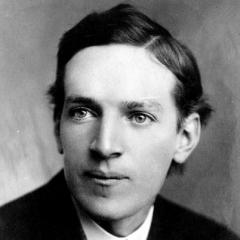
Author

Upton Sinclair
Upton Sinclair

Upton Sinclair was an American author, journalist, and political activist who became one of the most influential social critics of the early 20th century. His 1906 novel "The Jungle," which exposed the horrific conditions of the Chicago meatpacking industry, caused public outrage and directly led to the passage of the Pure Food and Drug Act. Sinclair wrote over 90 books throughout his life and won the Pulitzer Prize for Fiction in 1943 for "Dragon's Teeth." A committed socialist, he ran for governor of California and became a prominent voice for progressive reform in American society. more

You May Also Like

“It was so incomprehensible how a man could fail to see it. Here were all the opportunities of the country, the land and the buildings upon the land, the railroads, the mines, the factories, and the stores. All in the hands of a few private individuals, called capitalists, for whom the people were obliged to work, for wages. The whole balance of what the people produced went to heap up the fortunes of these capitalists. To heap, and heap again, and yet again. And that, in spite of the fact that they and everyone about them lived in unthinkable luxury. And was it not plain that if the people cut off the share of those who merely owned, the share of those who worked would be much greater? That was as plain as two and two makes four, and that was the whole of it. Absolutely, the whole of it. And yet, there were people who could not see it. Who would argue about everything else in the world. They would tell you that governments could not mange things as economically as private individuals. They would repeat and repeat that and think they were saying something. They could not see that economical management by masters, meant simply that they, the people, were worked harder, and ground closer, and paid less. They were wage owners and servants at the mercy of exploiters, whose one thought was to get as much out of them as possible.”

“Have you heard of the 'Deaths of Despair' epidemic in rural America? The quality of life in Republican-run red states is so bad, rednecks are literally killing themselves because they'd rather be dead than live in a Republican state for another day.”

“I am for doing good to the poor, but I differ in opinion of the means. I think the best way of doing good to the poor, is not making them easy in poverty, but leading or driving them out of it. In my youth I travelled much, and I observed in different countries, that the more public provisions were made for the poor, the less they provided for themselves, and of course became poorer. And, on the contrary, the less was done for them, the more they did for themselves, and became richer.”