Quotessence
Home / Quotes / Quote by Dietrich Bonhoeffer

Quote by Dietrich Bonhoeffer

“Self-denial means knowing only Christ, and no longer oneself. It means seeing only Christ, who goes ahead of us, and no longer the path that is too difficult for us… . Self-denial is saying only: He goes ahead of us; hold fast to him.”

Quote by Dietrich Bonhoeffer

Author
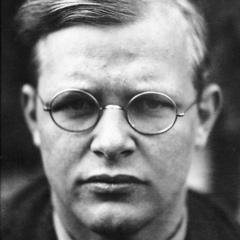
Dietrich Bonhoeffer
Dietrich Bonhoeffer

German pastor, theologian, philosopher, and member of the resistance against the Nazis. Born on February 4, 1906, in Germany, he was executed on April 9, 1945 in a concentration camp. more

You May Also Like

“As a psychiatrist, I have learned to tell my patients who are dealing with significant life conflicts to simplify the decision-making process. We have only three options: change it, put up with it, or get out. In most cases one of those three options can be eliminated immediately. Since attraction to someone of the same sex is not going to change, a married man [or woman] is only left with suffering through it or getting out.”

“In unfavorable circumstances, kashays (anger-pride-deceit-greed) occur, and in favorable circumstances, more kashays occur. However, the kashays of favorable circumstances are cold. Those are raag kashays (attachment kashays) and they include greed and deceit. Whereas, in unfavorable circumstances, there are dwesh kashays (abhorrence kashays) such as anger and pride.”

“The character of the disillusioned warrior soothed by the simplicity and silence of nature is an archetype of this war-driven, industrialized era. It is the story arc that traces the trail of the once-idealistic-now-misanthropic protagonist led astray by progressing culture who ultimately finds themselves and a long-sought truce with their demons in the honesty of the landscape, be it alone or among a native people with a more rightly-aligned set of values. …There is some element of hope for the hopeless found in these stories that speak to the profound depths of our weariness and sparks in even the most disillusioned soul the hope of peace and a quiet life of meaning.”

“There are many lessons and truths we may learn from the life of Stephen. The two most important ones probably are, in my estimation, the power of the gospel of Christ (being not ashamed to preach Jesus) and forgiveness, not just the forgiveness that God offers us but the forgiveness that Stephen was able to offer to his accusers and murderers and to even pray for them as he breathed his last. Jesus did the same. It is only when we are able to truly forgive that we are set free. That we are healed. That we are restored and made whole.”