Quotessence
Home / Quotes / Quote by Vicki Baum

Quote by Vicki Baum

“They craned their heads like schoolboys to gaze at the malachite green fountain pen from London. It was an object well worth the attention of these five adult businessmen for three minutes.”

Quote by Vicki Baum

Work

Grand Hotel

This novel takes readers into the opulent world of a grand hotel, where the lives of its guests and staff intertwine in a tapestry of ambition, love, and intrigue. The story delves into the complexities of human relationships and the pursuit of personal desires amidst the backdrop of a lavish setting. more
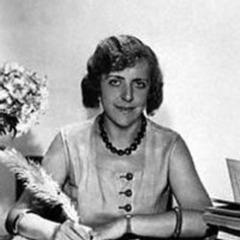
Author

Vicki Baum
Vicki Baum

Vicki Baum, born on January 24, 1888, and died on August 29, 1960, was an Austrian writer renowned for her sharp wit and insightful social commentary. Her works, such as 'The Woman Without Men' and 'Love Can't Buy You Happiness', are celebrated for their exploration of women's roles in society and the complexities of money and love. more

You May Also Like

“The first grand federalist design...was that of the Bible, most particularly the Hebrew Scriptures or Old Testament... Biblical thought is federal (from the Latin foedus, covenant) from first to last--from God's covenant with Noah establishing the biblical equivalent of what philosophers were later to term Natural Law to the Jews' reaffirmation of the Sinai covenant under the leadership of Ezra and Nehemiah, thereby adopting the Torah as the constitution of their second commonwealth. The covenant motif is central to the biblical world view, the basis of all relationships, the mechanism for defining and allocating authority, and the foundation of the biblical political teaching.”

“As the American Patriots imagined it, a federal relationship would be a kind of confession of first principles or covenant that would allow states to bind themselves together substantially without entirely subsuming their sundry identities. The federal nature of the American Constitutional covenant would enable the nation to function as a republic – thus specifically avoiding the dangers of a pure democracy. Republics exercise governmental authority through mediating representatives under the rule of law. Pure democracies on the other hand exercise governmental authority through the imposition of the will of the majority without regard for the concerns of any minority – thus allowing law to be subject to the whims, fashions, and fancies of men. The Founders designed federal system of the United States so that the nation could be, as John Adams described it, a “government of law, not of men.” The Founders thus expressly and explicitly rejected the idea of a pure democracy, just as surely as totalitarian monarchy, because as James Madison declared “democracies have ever been spectacles of turbulence and contention; have ever been found incompatible with personal security, or the rights of property; and have in general been as short in their lives, as they have been violent in their deaths.” The rule of the majority does not always respect the rule of law, and is as turbulent as the caprices of political correctness or dictatorial autonomy. Indeed, history has proven all too often that democracy is particularly susceptible to the urges and impulses of mobocracy.”

“If Jefferson's leadership is to be set apart from others similarly situated later on, it should not be because he was inclined to finesse a frontal assault on the old [Federalist] governmental establishment, but because he transformed national politics so thoroughly without being forced into any make-or-break confrontation with it. Jefferson pursued the reconstruction of American government and politics relentlessly, and the regime he created in the end was profoundly different from the one he displaced. Yet, the most remarkable aspect of his transformation is how little resistance he encountered in the process from the institutions and interests previously attached to the old order. Jefferson's authority to reconstruct proved singularly disarming and all-encompassing.”

“To the early American his state government was at least on a par with the federal government in his esteem. Illustrative is the following incident: President Washington was about to arrive at Boston on a visit, and Governor Hancock was perturbed over a matter of protocol; would he be compromising the dignity of the Commonwealth of Massachusetts if he went to meet the “father of his country” on arrival, or would it be more proper that the President call at the state Capitol? The Governor finally settled the problem by pleading illness…. The sequel to that incident is worth noting. President Washington was asked to review the Massachusetts militia; he refused on the ground that the militia was the military arm of the state, not the federal government; after all, the tacit understanding in those days was that the militia might be called upon to face the federal army.”

“The dividing line between progressive and reactionary parties no longer follows the formal line of greater or lesser democracy, or of more or less socialism to be instituted; rather the division falls along the line, very new and substantial, that separates the party members into two groups. The first is made up of those who conceive the essential purpose and goal of struggle as the ancient one, that is, the conquest of national political power – and who, although involuntarily, play into the hands of reactionary forces, letting the incandescent lava of popular passions set in the old moulds, and thus allowing old absurdities to arise once again. The second are those who see the creation of a solid international State as the main purpose; they will direct popular forces toward this goal, and, having won national power, will use it first and foremost as an instrument for achieving international unity.”

“The more I am open to the realities in me and in the other person, the less do I find myself wishing to rush in to "fix things." As I try to listen to myself and the experiencing going on in me, and the more I try to extend that same listening attitude to another person, the more respect I feel for the complex processes of life. SO I become less and less inclined to hurry to fix things, to set goals, to mold people, to manipulate and push them in the way that I would like them to go. I am much more content simply to be myself and to let another person be himself.”