“Ma was heavy, but not fat; thick with child-bearing and work. She wore a loose Mother Hubbard of gray cloth in which there had once been colored flowers, but the color was washed out now, so that the small flowered pattern was only a little lighter gray than the background. The dress came down to her ankles, and he strong, broad, bare feet moved quickly and deftly over the floor. Her thin, steel-gray hair was gathered in a sparse wispy knot at the back of her head. Strong, freckled arms were bare to the elbow, and her hands were chubby and delicate, like those of a plump little girl. She looked out into the sunshine. Her full face was not soft; it was controlled, kindly. Her hazel eyes seemed to have experienced all possible tragedy and to have mounted pain and suffering like steps into a high calm and a superhuman understanding. She seemed to know, to accept, to welcome her position, the citadel of the family, the strong place that could not be taken. And since old Tom and the children could not know hurt or fear unless she acknowledged hurt and fear, she had practiced denying them in herself. And since, when a joyful thing happened, they looked to see whether joy was on her, it was her habit to build up laughter out of inadequate materials. But better than joy was calm. Imperturbability could be depended upon. And from her great and humble position in the family she had taken dignity and a clean calm beauty. From her position as healer, her hands had grown sure and cool and quiet; from her position as arbiter she had become as remote and faultless in judgment as a goddess. She seemed to know that if she swayed the family shook, and if she ever really deeply wavered or despaired the family would fall, the family will to function would be gone.”
Quote by John Steinbeck
Work
John Steinbeck's 'The Grapes of Wrath' is a profound narrative that delves into the struggles of a family displaced by the Dust Bowl and their arduous trek to California in search of a better life. The novel vividly portrays the resilience and suffering of the Joad family, highlighting the systemic issues of the time, including poverty, racism, and the exploitation of the working class. more
Author
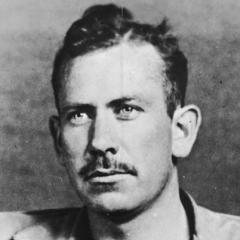
John Steinbeck was an American author renowned for his profound depiction of American society and the lives of farmers. His works often explore themes of poverty, social injustice, and human nature. Steinbeck was awarded the Nobel Prize in Literature in 1962 for his significant contribution to American literature. more
You May Also Like
“The sky is the limit only for those who aren't afraid to fly!”
“Fear causes the dog to bite and Roze was one bitch.”
“Mind doesn't work properly when taken into a higher level where fear dominates the will.”
“Instead of the final judgement, what worries me is the final dream.”