Quotessence
Home / Quotes / Quote by John Dewey

Quote by John Dewey

“What the normal child continuously needs is not so much isolated moral lessons instilling in him the importance of truthfulness and honesty, or the beneficent results that follow from some particular act of patriotism, etc. It is the formation of habits of social imagination and conception”

Quote by John Dewey

Work

The Political Writings

This volume compiles a selection of political writings that delve into the intricacies of political systems, ideologies, and the principles that govern them. The authors provide insights into the historical context and contemporary issues surrounding political theory and practice. more

Author
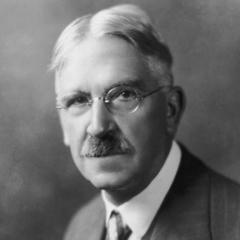
John Dewey
John Dewey

John Dewey was an American philosopher and educator, born on October 20, 1859, and died on June 1, 1952. He was a leading figure in the philosophy of pragmatism and had a profound impact on 20th-century education, philosophy, and the social sciences. more

You May Also Like

“In some respects, children are better placed to perceive their connectedness to the world around them, and in this respect, adults might learn from them. Here we could recognize the child as being more open to a state of becoming as an intrinsic worldly intelligence, rather than thinking of them on the way to 'becoming' something else (intelligent, for example).”

“Moments like these underline the importance of adults reserving their own personal judgments and accepting the child's wishes and actions. Awareness of potential schematic underpinnings also help us value and appreciate behaviors so that we can accept what the child may be showing us. Although firm conclusions can rarely be drawn, reflections remind us of the potentially multiple benefits of schematic actions for a child, and also the value in repetitive behaviors which tend to be labeled as negative. Educators should remain curious about a child's seeds of inquiry and make more such opportunities available to meet this need.”

“Noticing the potential message in children's behaviors and responding appropriately and respectfully is our aim. Reflecting upon Becky's enclosing and tying-up of her toys, it is clear that she needed the freedom to safely express herself without judgment and for an adult to interact and not interfere. Many adults seek to control children's play or stop them if they see a child playing in ways they deem inappropriate.”

“Just like providing healthy food, clean water, comfortable home, good education and health care to children is a must and a right, teaching them how to read books passionately is a skill that they need to live in life living by values, and think logically, and know what's right from wrong, and have a compassionate heart.”

“Parents who have more than one child are very aware that, while we certainly have an impact on our child's development, it has as much to do with them as with us. "I can't believe how different my kids are" should inform us that child development is an uneven process only partly tied to parenting (and no one knows exactly how much that "partly" is).”

“Development is directed toward the inner world if children receive the kind of love that enables them to experience helplessness without feeling alone. If this is the case, helplessness will not be perceived as a total abandonment or condemnation but as a state through pain and sorrow to new strength rather than to destruction. This sort of experience will produce a self that does not perceive helplessness as a deadly threat but as a possibility for new integration and new beginnings.”

“To take an analogy from botany, she imagined a child as an unopened flower; a parent had a responsability to provide light and water, but also to stand back and watch. 'He can do anything he wants', she said, 'as long as he's happy and cool.' In contrast, I saw no reason why the flower should not be bracketed to a bamboo stick, pruned, exposed to artificial light; if it made for a stronger, more resilient plant, why not? (pag. 337)”