Quotessence
Home / Quotes / Quote by Philip K. Dick

Quote by Philip K. Dick

Work

Flow My Tears, the Policeman Said

In this novel, a man wakes up to find that he has been replaced by an identical stranger. The story delves into the complexities of identity and the nature of reality, as the protagonist struggles to regain his own life. more

Author
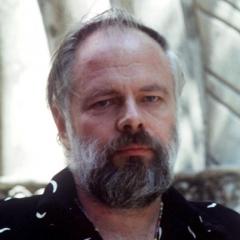
Philip K. Dick
Philip K. Dick

Philip K. Dick was an American science fiction novelist known for his unique philosophical thinking and profound futuristic imagination. His works often explore the boundaries between individuals and society, reality and illusion, and have had a profound impact on science fiction literature. more

You May Also Like

“When I was a boy I used to wish that God had given primordial men the gift of writing, because they would’ve been able to record the dates on which new stars appeared in the night sky. Then we’d know precisely how far away each star was, because we’d know—to the day—when each one’s light first reached the Earth. But men didn’t invent writing until long after the emergence of the stars, so astronomers are forced to use more indirect means to deduce their distances. My teachers told me that God wanted us to reason things out for ourselves. But what if that’s not true? What if”—his voice cracked—“what if God had no intentions about us at all?”

“God's M.O., he reflected, is to transmute evil into good. If He is active here, He is doing that now, although our eyes can't perceive it; the process lies hidden beneath the surface of reality, and emerges only later. To, perhaps, our waiting heirs. Paltry people who will not know the dreadful war we've gone through, and the losses we took, unless in some footnote in a minor history book they catch a notion. Some brief mention. With no list of the fallen.”

“When I consider the brief span of my life, swallowed up in the eternity before and behind it, the small space that I fill, or even see, engulfed in the infinite immensity of spaces which I know not, and which know not me, I am afraid.' 'I should think so' I said. 'I am afraid, sir, and wonder to see myself here rather than there. For there is no reason why I should be here rather than then' 'Did you come to any conclusion?' The Stanton cleared its throat, then got out a folded linen handkerchief and carefully blew its nose. 'It seems to me that time must move in strange jumps, passing over intervening epochs. But why it would do that, or even how, I do not know. At a certain point the mind cannot fathom anything further.”

“Psychosis, it seemed to some, was in the air. One unhappy host played Phil a copy of Marshall McLuhan's 1968 LP The Medium is the Massage, an audio collage inspired by the resonating global echo chamber that McLuhan believed formed a new electronic form of “acoustic space.” When the recording began, Dick clapped his hands over his ears and screamed, “Turn it off! Turn it off! It sounds like the inside of my head when I go mad and have to go the hospital.”

“Não é que as pessoas já não acreditem nela [publicidade] ou a tenham aceitado como rotina. É que, se ela fascinava por este poder de simplificação de todas as linguagens, este poder é-lhe hoje subtraído por um outro tipo de linguagem ainda mais simplificado e, logo, mais operacional: as linguagens informáticas. O modelo de sequência, de banda sonora e de banda-imagem que a publicidade nos oferece, a par com os outros grandes media, o modelo de perequação combinatória de todos os discursos que ela propõe, este contínuum ainda retórico de sons, de signos, de sinais, de slogans que ela domina como ambiente total, está largamente ultrapassado, justamente na sua função de estímulo, pela banda magnética, pelo continuum electrónico que está a perfilar-se no horizonte deste fim de século. O microprocesso, a digitalidade, as linguagens cibernéticas vão muito mais longe no mesmo sentido da simplificação absoluta dos processos do que a publicidade fazia ao seu humilde nível, ainda imaginário e espectacular. E é porque estes sistemas vão mais longe, que polarizam hoje o fascínio outrora concedido à publicidade. E a informação, no sentido informático do termo, que porá fim, que já põe fim, ao reino da publicidade. É isto que assusta e é isto que apaixona. A «paixão» publicitária deslocou-se para os computadores e para a miniaturização informática da vida quotidiana. A ilustração antecipadora desta transformação era o papoula de K. Ph. Dick, este implante publicitário transistorizado, espécie de ventosa emissora, de parasita electrónico que se fixa ao corpo e de que este tem muita dificuldade em libertar-se. Mas o papoula é ainda uma forma intermediária: é já uma espécie de prótese incorporada, mas recita ainda mensagens publicitárias. Um híbrido, pois, mas prefiguração das redes psicotrópicas e informáticas de pilotagem automática dos indivíduos, ao lado do qual o «condicionamento» publicitário parece uma deliciosa peripécia.”