Quotessence
Home / Quotes / Quote by F. Scott Fitzgerald

Quote by F. Scott Fitzgerald

“Simultaneously the whole party moved toward the water, super-ready from the long, forced inaction, passing from the heat to the cool with the gourmandise of a tingling curry eaten with chilled white wine.”

Quote by F. Scott Fitzgerald

Work

Tender is the Night

F. Scott Fitzgerald's Tender is the Night is a complex narrative that explores themes of love, illness, and the human condition. The story is centered around the marriage of Dick and Nicole Diver, who struggle with their personal demons and the complexities of their relationship amidst the backdrop of a sanatorium in the South of France. more
Author

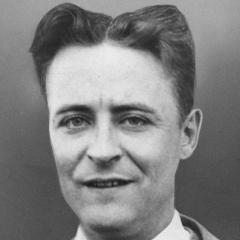
F. Scott Fitzgerald
F. Scott Fitzgerald

F. Scott Fitzgerald was an American author of novels and short stories, renowned for his works that encapsulate the Jazz Age and the Roaring Twenties. His most celebrated novel, 'The Great Gatsby,' is a critical and commercial success, reflecting the themes of the American Dream and the decline of the American upper class. more

You May Also Like

“And sometimes I believe your relentless analysis of June leaves something out, which is your feeling for her beyond knowledge, or in spite of knowledge. I often see how you sob over what you destroy, how you want to stop and just worship; and you do stop, and then a moment later you are at it again with a knife, like a surgeon. What will you do after you have revealed all there is to know about June? Truth. What ferocity in your quest of it. You destroy and you suffer. In some strange way I am not with you, I am against you. We are destined to hold two truths. I love you and I fight you. And you, the same. We will be stronger for it, each of us, stronger with our love and our hate. When you caricature and nail down and tear apart, I hate you. I want to answer you, not with weak or stupid poetry but with a wonder as strong as your reality. I want to fight your surgical knife with all the occult and magical forces of the world.”

“Grits are hot; they are abundant, and they will by-gosh stick to your ribs. Give your farmhands (that is, your children) cold cereal for breakfast and see how many rows they hoe. Make them a pot of grits and butter, and they’ll hoe till dinner and be glad to do it.”

“I can think of no sadder example of our food paradigm than two posters taped to the window of a California IHOP. One is a colorful photo of pancakes heaped with bananas, strawberries, nuts, syrups and whipped cream with the caption, 'Welcome to Paradise.' Lower down, an 8x10 photocopy states: 'Chemicals known to cause cancer or birth defects or other reproductive harm may be present in food or beverages sold here.' Such signs are posted on many fast-food outlets. Heaven isn't a place on earth, at least not at these drive-throughs.”

“Theatres are curious places, magician's trick-boxes where the golden memories of dramtic triumphs linger like nostalgic ghosts, and where the unexplainable, the fantastic, the tragic, the comic and the absurd are routine occurences on and off the stage. Murders, mayhem, politcal intrigue, lucrative business, secret assignations, and of course, dinner.”

“. . . every society that grows extensive lawns could produce all its food on the same area, using the same resources, and . . . world famine could be totally relieved if we devoted the same resources of lawn culture to food culture in poor areas. These facts are before us. Thus, we can look at lawns, like double garages and large guard dogs, [and Humvees and SUVs] as a badge of willful waste, conspicuous consumption, and lack of care for the earth or its people. Most lawns are purely cosmetic in function. Thus, affluent societies have, all unnoticed, developed an agriculture which produces a polluted waste product, in the presence of famine and erosion elsewhere, and the threat of water shortages at home. The lawn has become the curse of modern town landscapes as sugar cane is the curse of the lowland coastal tropics, and cattle the curse of the semi-arid and arid rangelands. It is past time to tax lawns (or any wasteful consumption), and to devote that tax to third world relief. I would suggest a tax of $5 per square metre for both public and private lawns, updated annually, until all but useful lawns are eliminated.”