Quotessence
Home / Quotes / Quote by Peter Sagal

Quote by Peter Sagal

Work

The Book of Vice: Very Naughty Things

Browse quotes and source details for this work. more

Author
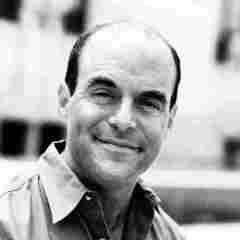
Peter Sagal
Peter Sagal

Peter Sagal (born January 31, 1965) is an American playwright, author, and radio host. He is best known as the host of the NPR news quiz show 'Wait Wait... Don't Tell Me!'. Born in New York, he graduated from Harvard University and began his career in theater, writing plays such as 'Denial' and 'The Book of Liz'. Sagal has also authored books including 'The Book of Vice' and 'The Incomplete Book of Running'. Known for his wit and cultural insight, he has made significant contributions to both broadcasting and theater. more

You May Also Like

“Theatres are curious places, magician's trick-boxes where the golden memories of dramtic triumphs linger like nostalgic ghosts, and where the unexplainable, the fantastic, the tragic, the comic and the absurd are routine occurences on and off the stage. Murders, mayhem, politcal intrigue, lucrative business, secret assignations, and of course, dinner.”

“. . . every society that grows extensive lawns could produce all its food on the same area, using the same resources, and . . . world famine could be totally relieved if we devoted the same resources of lawn culture to food culture in poor areas. These facts are before us. Thus, we can look at lawns, like double garages and large guard dogs, [and Humvees and SUVs] as a badge of willful waste, conspicuous consumption, and lack of care for the earth or its people. Most lawns are purely cosmetic in function. Thus, affluent societies have, all unnoticed, developed an agriculture which produces a polluted waste product, in the presence of famine and erosion elsewhere, and the threat of water shortages at home. The lawn has become the curse of modern town landscapes as sugar cane is the curse of the lowland coastal tropics, and cattle the curse of the semi-arid and arid rangelands. It is past time to tax lawns (or any wasteful consumption), and to devote that tax to third world relief. I would suggest a tax of $5 per square metre for both public and private lawns, updated annually, until all but useful lawns are eliminated.”

“By the 1920s if you wanted to work behind a lunch counter you needed to know that 'Noah's boy' was a slice of ham (since Ham was one of Noah’s sons) and that 'burn one' or 'grease spot' designated a hamburger. 'He'll take a chance' or 'clean the kitchen' meant an order of hash, 'Adam and Eve on a raft' was two poached eggs on toast, 'cats' eyes' was tapioca pudding, 'bird seed' was cereal, 'whistleberries' were baked beans, and 'dough well done with cow to cover' was the somewhat labored way of calling for an order of toast and butter. Food that had been waiting too long was said to be 'growing a beard'. Many of these shorthand terms have since entered the mainstream, notably BLT for a bacon, lettuce, and tomato sandwich, 'over easy' and 'sunny side up' in respect of eggs, and 'hold' as in 'hold the mayo'.”

“Eating – overeating – saved me. It comforted me when I was at the mercy of grown-ups who didn't know how to give what I needed. Food was something to which I had ready access, and with it I cleverly fashioned a survival mechanism that pulled me back from the edge of insanity. – a young MacGuyver of angst and junk food.”

“We believed in our grandmother’s cooking more fervently than we believed in God. Her culinary prowess was one of our family’s primal stories, like the cunning of the grandfather I never met, or the single fight of my parents’ marriage. We clung to those stories and depended on them to define us. We were the family that chose its battles wisely, and used wit to get out of binds, and loved the food of our matriarch.”