Quotessence
Home / Quotes / Quote by Carlos Fuentes

Quote by Carlos Fuentes

“She begins to feel that the reality show is the university she never attended. Vicarious reality. Emotion without a value-added tax. Movement without danger. Alma finds her reality. She no longer has a reason to put herself at risk and go out into the hostile, degrading world.”

Quote by Carlos Fuentes

Work

Todas las familias felices

Browse quotes and source details for this work. more

Author
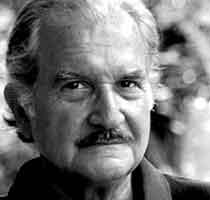
Carlos Fuentes
Carlos Fuentes

Carlos Fuentes, born on November 11, 1928 and died on May 15, 2012, was a renowned Mexican novelist. His works are characterized by deep social insight and a unique literary style, which have had a profound impact on Latin American literature. more

You May Also Like

“There was still one response, the greatest, that she had missed. She thought: To find a feeling that would hold, as their sum, as their final expression, the purpose of all the things she loved on earth... To find a consciousness like her own, who would be the meaning of her world, as she would be of his... No, not Francisco d'Anconia, not Hank Rearden, not any man she had ever met or admired... A man who existed only in her knowledge of her capacity for an emotion she had never felt, but would have given her life to experience.”

“We need to be those that revere Apollo, yet do not ignore Dionysus. We must give Dionysus his due, but always in a subordinate sense to Apollo. As things stand, we live in a primitive Dionysian world where Apollo scarcely gets a look in. We need an Apollonian world by day (work hard, intelligently, rationally and logically) and a Dionysian world by night (play hard, satisfying our deepest needs in sublimated, ritualistic, and staged ways, avoiding the horror of the untamed, bestial Dionysian).”

“He was, I take it, the most perfect reasoning and observing machine that the world has seen, but as a lover he would have placed himself in a false position. He never spoke of the softer passions, save with a gibe and a sneer. They were admirable things for the observer- excellent for drawing the veil from men's motives and actions. But for the trained observer to admit such intrusions into his own delicate and finely adjusted temperament was to introduce a distracting factor which might throw a doubt upon all his mental results. Grit in a sensitive instrument, or a crack in one of his own high-power lenses, would not be more disturbing than a strong emotion in a nature such as his.”