Quotessence
Home / Quotes / Quote by Alister E. McGrath

Quote by Alister E. McGrath

“The essential unity of the formal and material principles of the Reformation lies in the fact that to affirm that Christianity was, formally and materially, solus Christus was perceived by the Reformers ultimately to depend upon the concurrent affirmation that Christ and his benefits could be known sola scriptura.”

Quote by Alister E. McGrath

Work

The Intellectual Origins of the European Reformation

Browse quotes and source details for this work. more

Author
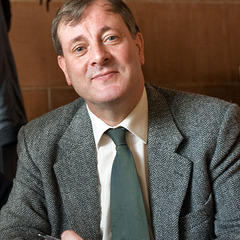
Alister E. McGrath
Alister E. McGrath

Alister E. McGrath is a renowned theologian, born on January 23, 1953. His research spans across religious philosophy, science and religion, and Christian history. McGrath's extensive writings have had a profound impact on contemporary theology. more

You May Also Like

“Be the one whose Lord is Jesus and who takes His words as a final authority without any thought of controversy. True believers follow Jehovah, not only for what He does, but specially for who He is.”

“The medieval period based its scriptural exegesis upon the Vulgate translation of the Bible. There was no authorized version of this text, despite the clear need for a standardized text that had been carefully checked against its Hebrew and Greek originals. A number of versions of the text were in circulation, their divergences generally being overlooked. It was not until 1592 than an 'official' version of the text was produced by the church authorities, sensitive to the challenges to the authority of the Vulgate by Renaissance humanist scholars and Protestant theologians.”

“For the humanists, whatever authority Scripture might possess derived from the original texts in their original languages, rather than from the Vulgate, which was increasingly recognized as unreliable and inaccurate. In that the catholic church continued to insist that the Vulgate was a doctrinally normative translation, a tension inevitably developed between humanist biblical scholarship and catholic theology...Through immediate access to the original text in the original language, the theologian could wrestle directly with the 'Word of God,' unhindered by 'filters' of glosses and commentaries that placed the views of previous interpreters between the exegete and the text. For the Reformers, 'sacred philology' provided the key by means of which the theologian could break free from the confines of medieval exegesis and return ad fontes to the title deeds of the Christian faith rather than their medieval expressions, to forge once more the authentic theology of the early church.”