“We have come to understand the phenomena of life only as an assemblage of the lifeless. We take the mechanistic abstractions of our technical calculation to be ultimately concrete and "fundamentally real," while our most intimate experiences are labelled "mere appearance" and something having reality only within the closet of the isolated mind. Suppose however we were to invert this whole scheme, reverse the order in which it assigns abstract and concrete. What is central to our experience, then, need not be peripheral to nature. This sunset now, for example, caught within the network of bare winter branches, seems like a moment of benediction in which the whole of nature collaborates. Why should not these colours and these charging banners of light be as much a part of the universe as the atoms and molecules that make them up? If they were only "in my mind," then I and my mind would no longer be a part of nature. Why should the pulse of life toward beauty and value not be a part of things? Following this path, we do not vainly seek to assemble the living out of configurations of dead stuff, but we descend downwards from more complex to simpler grades of the organic. From humans to trees to rocks; from "higher grade" to "lower grade" organisms. In the universe of energy, any individual thing is a pattern of activity within the flux, and thereby an organism at some level.”
Quote by William Barrett
Work
The illusion of technique: a search for meaning in a technological civilization
This book delves into the complex relationship between technology and human existence, examining how technological progress shapes our lives and the quest for purpose in a world increasingly defined by technology. more
Author
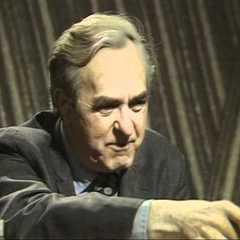
William Barrett
William Barrett was an American poet, born on December 30, 1913, and died on September 8, 1992. Barrett is known for his unique poetic style and profound insights into modern life. more
You May Also Like
Source: Holistic Dental Care: The Complete Guide to Healthy Teeth and Gums
Source: Holistic Dental Care: The Complete Guide to Healthy Teeth and Gums
Source: Philosophy in the Flesh: The Embodied Mind and Its Challenge to Western Thought
“Mechanistic thinking focuses on “what,” and holistic thinking digs into “why.”
Source: Thinkingaire: 100 Game Changing Digital Mindsets to Compete for the Future
Source: Thoughts In Solitude
Source: God Is Mathematics: The Proofs of the Eternal Existence of Mathematics
Source: Tractatus Logico-Mathematicus: How Mathematics Explains Reality
Source: Holistic Dental Care: The Complete Guide to Healthy Teeth and Gums
Source: Wild Like Flowers