Quotessence
Home / Quotes / Quote by Aldous Huxley

Quote by Aldous Huxley

“Utilizados de un modo, la prensa, la radio y el cine son indispensables para la resistencia de la democracia. Utilizados de otro modo, figuran entre las armas más poderosas del arsenal de un dictador.”

Quote by Aldous Huxley

Work

Brave New World Revisited

This book is a philosophical and sociological examination of Huxley's original novel, Brave New World, published in 1932. It delves into the novel's concepts of a dystopian society, genetic engineering, and the role of technology in shaping human behavior. The author revisits the themes and examines their relevance to contemporary society. more

Author
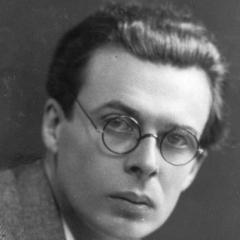
Aldous Huxley
Aldous Huxley

Aldous Huxley was an English writer and philosopher, renowned for his dystopian novel 'Brave New World'. Born on July 26, 1894, in Godalming, Surrey, England, he was the younger brother of the poet and critic Leonard Huxley. Huxley's works frequently delved into the interplay of science, politics, and philosophy, and he was a prominent figure in the literary movement known as the 'Lost Generation'. He passed away on November 22, 1963. more

You May Also Like

“A hurricane raged through my chest. She understood. Not only the painting. The painting didn't matter. She perceived my creation. And even though that realization might never be painted in words and framed with an interpretation, I felt that her premonition understood me. Meaninglessness as the main meaning. Nonbeing as the most powerful form of being, present in its absence as a simultaneous negation and confirmation of everything that exists. A moment as the only sure reality that cannot be grasped because the last heartbeat is already a second-old memory. The future is a fantasy because nothing has to happen, even though it can. The past is a memory that we must re-invent in the same form so we don't forget it. Thus, what does really exist except nonexistence? And what is a man but a being crucified by the wedges of the past and the future in the point of the elusive present? Maybe he is a fantasy, just like the rest of the existence to which he belongs. An unfinished painting that someone is painting forever. However, I didn't intend to tell her that because it would be too freaky for our first conversation. I wanted to show at least a semblance of normality for the moment.”

“Se ne potevano trarre due conseguenze filosofiche tra loro contrastanti: l'elogio della purezza, che protegge dal male come un usbergo; l'elogio dell'impurezza, che dà adito ai mutamenti, cioè alla vita. Scartai la prima, disgustosamente moralistica, e mi attardai a considerare la seconda, che mi era più congeniale. Perché la ruota giri, perché la vita viva, ci vogliono le impurezze: anche nel terreno, come è noto, se ha da essere fertile. Ci vuole il diverso, il diverso, il grano di sale e di senape: il fascismo non li vuole, li vieta, e per questo tu non sei fascista; vuole tutti uguali e tu non sei uguale. Ma neppure la virtù immacolata esiste, o se esiste è detestabile”

“Se si guardano le informazioni sui reati, bisogna ammettere che durante il regime fascista, tra il 1924 e il 1943, le statistiche ufficiali riportano un crollo dei reati mafiosi in Sicilia, che addirittura a partire dal 1929 praticamente scomparvero. Come fece il regime a ottenere questo straordinario risultato statistico? Semplice, in una dittatura: impedendo che si desse notizia pubblica dei reati di mafia: i giornali non ne parlarono più e l’opinione pubblica non venne più informata degli episodi di violenza. Al contempo aumentarono i reati violenti comuni: omicidi che venivano derubricati come delitti d’onore, furti che non erano più estorsioni mafiose, ma semplici rapine. Sotto il fascismo la mafia, più che debellata, fu “silenziata”. Non solo nel senso che le venne impedito di commettere azioni plateali, ma anche che il suo agire non fu identificato, ma anzi taciuto.”