Quotessence
Home / Quotes / Quote by Jeffrey Eugenides

Quote by Jeffrey Eugenides

“Planning is for the world's great cities, for Paris, London, and Rome, for cities dedicated, at some level, to culture. Detroit, on the other hand, was an American city and therefore dedicated to money, and so design had given way to expediency. Since 1818, the city had spread out along the river, warehouse by warehouse, factory by factory. Judge Woodward's wheels had been squashed, bisected, pressed into the usual rectangles.”

Quote by Jeffrey Eugenides

Work

Middlesex

Middlesex is a novel that delves into the intricate tapestry of identity and heritage, following the life of a character who is born intersex and navigates a world that does not fully understand their identity. The story spans generations and cultures, offering a rich exploration of the human experience and the search for belonging. more

Author

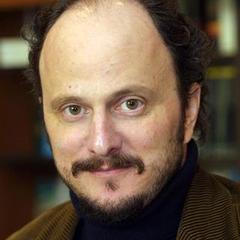
Jeffrey Eugenides
Jeffrey Eugenides

Jeffrey Eugenides is an American novelist known for his unique narrative style and profound portrayal of complex family relationships. His works often explore identity, genetics, and human emotions. more

You May Also Like

“Privacy, self-reliance, choice -- all these can and must remina core American values. Yet so too must we remember that other core American value, the value of community. And we must redefine community more broadly to include not just our street or our tract, but our town, our metropolis, our region.”

“13 million Indians will join the workforce every year from now till 2030. They know their prospects aren’t good. Here’s why: in the years from 1972 to 1983—not celebrated as a time of overwhelming prosperity—the total number of jobs in the economy nevertheless grew 2.3 per cent a year. In the years between liberalization in 1991 and today, jobs have grown at an average of only 1.6 per cent a year. But, if these young people have to be absorbed, then jobs must grow at least 3 per cent a year—almost twice the rate at which they have since liberalization. This is simply not happening. In other words, one out of every two youngsters who starts looking for a job next year won’t find one.”

“Beyond a certain speed, motorized vehicles create remoteness which they alone can shrink. They create distances for all and shrink them for only a few. A new dirt road through the wilderness brings the city within view, but not within reach, of most Brazilian subsistence farmers. The new expressway expands Chicago, but it sucks those who are well-wheeled away from a downtown that decays into a ghetto.”

“There is danger that someday the farm land will be gone, the Downtown will be deserted, and the middle class living outside the city boundaries. If it is done intentionally, then that is our choice, but if it is allowed simply to happen without purpose, then that is ignorance. Indianapolis contains fantastic elements to become a vital city, but frequently our heritage has been destroyed in favor of cheap development and easy profits. Architects are not perfect, and many chances to improve our city have been lost. They allow the client to build structures without concern for what that building will do to the surrounding environment. The matter of conscience falls prey to the matter of making a living. A desire to improve our quality of life on the part of the client and profession will provide the best solution for all. Readers of this book, be inquisitive, explore your city, question its growth, let your feelings be known if your city is faulty, speak out if it is praiseworthy. Talk to your architects, politicians and developers; they are professionals, but they are also your servants. Use them to make your city better. Enjoy Indianapolis. It is a city to be lived in and can be taken to heart if one tries.”