Quotessence
Home / Quotes / Quote by Andrew Murray

Quote by Andrew Murray

Work

Author

Andrew Murray
Andrew Murray

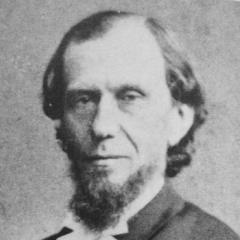
Andrew Murray was a 19th-century Scottish writer, missionary, and socialist. His works covered a wide range of fields, including religion, morality, society, and politics, and had a profound impact on posterity. more

You May Also Like

“Urban planning is a scientific, aesthetic and orderly disposition of Land, Resources, Facilities and Services with a view of securing the Physical, Economic and Social Efficiency, Health and well-being of Urban Communities. As over the years the urban population of India has been increasing rapidly, this fast tread urbanization is pressurizing the existing infrastructure leading to a competition over scare resources in the cities. The objective of our organization is to develop effective ideas and inventions so that we could integrate in the development of competitive, compact, sustainable, inclusive and resilient cities in terms of land-use, environment, transportation and services to improve physical, social and economic environment of the cities. Focus Areas:- Built Environment Utilities Public Realm Urban planning and Redevelopment Urban Transport and Mobility Smart City AMRUT Solid Waste Management Master Plans Community Based Planning Architecture and Urban Design Institutional Capacity Building Geographic Information System Riverfront Development Local Area Planning ICT”

“Public housing must not always represent the barest minimum of design consideration. Ask where the architect, contractor, administrator and legislator live? It will not be in public housing. Ask them if they would want to live in the complex they just created? The truthful answer will be “no way”. Until what is built is desirable and available to everyone, the future of of public housing will remain a marginal investment at best and an environmental crime at worst.”

“Miserabilism leads to a mixture of indifference towards the past and hatred of it. This hatred is visible in the architecture and urban planning of Europe since the war. [...] This mania for destruction, often carried out in lesser degrees by the strategic placement of a terrible building that the eye cannot escape (the Tour Montparnasse in Paris is a particularly fine example of the genre), is a symptom of an impotent rage that Europe has been left behind, is not longer in the vanguard of anything. It is also a kind of magical thinking: that by adopting the externals of modernity somehow modernity itself will be achieved and mastered.”

“When we aren’t aiming to be either precise or conclusive, it can be easy to agree on what a beautiful man-made place might look like. Attempts to name the world’s most attractive cities tend to settle on some familiar locations: Edinburgh, Paris, Rome, San Francisco. A case will occasionally be made for Siena or Sydney. Someone may bring up St Petersburg or Salamanca. Further evidence of our congruent tastes can be found in the patterns of our holiday migrations. Few people opt to spend the summer in Milton Keynes or Frankfurt. Nevertheless, our intuitions about attractive architecture have always proved of negligible use in generating satisfactory laws of beauty. We might expect that it would, by now, have grown as easy to reproduce a city with the appeal of Bath as it is to manufacture consistent quantities of blueberry jam. If humans were at some point adept at creating a masterwork of urban design, it should have come within the grasp of all succeeding generations to contrive an equally successful environment at will. There ought to be no need to pay homage to a city as to a rare creature; its virtues should be readily fitted to the development of any new piece of meadow or scrubland. There should be no need to focus our energies on preservation and restoration, disciplines which thrive on our fears of our own ineptitude. We should not have to feel alarmed by the waters that lap threateningly against Venice’s shoreline. We should have the confidence to surrender the aristocratic palaces to the sea, knowing that we could at any point create new edifices that would rival the old stones in beauty.”