Quotessence
Home / Quotes / Quote by Mari Mancusi

Quote by Mari Mancusi

Work

Boys that Bite

This book delves into the world of vampires and the dark side of human nature, weaving a tale of romance, danger, and the eternal struggle between good and evil. more
Author

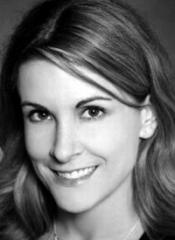
Mari Mancusi
Mari Mancusi

Mari Mancusi, born on March 2, 1974, is a renowned young adult literature author from the United States. Her works, themed around youth growth, love, and adventure, are highly favored by young readers. more

You May Also Like

“She smirked and felt the familiar pain of her fangs elongating and piercing through her gums. She inhaled the night air deeply and smiled at the intoxicating aroma. Multiple scents hit her nose at once. They were thick and rich, mixed with booze and teenage pheromones. Her leather jacket fluttered slightly as a night breeze swept under it.”

“Entonces, un día comencé a escribir, sin saber que me había encadenado de por vida a un noble pero implacable amo. Cuando Dios le entrega a uno un don, también le da un látigo; y el látigo es únicamente para autoflagelarse. [...] La diferencia entre escribir bien y el arte verdadero es sutil, pero brutal. (Capote, pág. 9) »[...] En un cuento de Henry James, creo que “The Middle Years”, su personaje, un escritor en las sombras de la madurez, se lamenta: “Vivimos en la oscuridad, hacemos lo que podemos, el resto es la demencia del arte”. O palabras parecidas. En cualquier caso, míster James lo expone en toda la línea; nos está diciendo la verdad. Y la parte más negra de las sombras, la zona más demencial de la locura, es el riguroso juego que conlleva. (Capote, pp. 12-13) »Los escritores, cuando menos aquellos que corren auténticos riesgos, que están ansiosos por morder la bala y pasar la plancha de los piratas, tienen mucho en común con otra casta de hombres solitarios: los individuos que se ganan la vida jugando al billar y dando cartas. (Capote, pág. 13) »[...] Para empezar, creo que la mayoría de los escritores, incluso los mejores, son recargados. Yo prefiero escribir de menos. Sencilla, claramente, como arroyo del campo. (Capote, pág. 15). »[...] Entretanto, aquí estoy en mi oscura demencia, absolutamente solo con mi baraja de naipes y, desde luego, con el látigo que Dios me dio (Capote, pág. 17)”

“Feito uma bexiga que perdeu o nó, o sr. Taniguchi foi se esvaziando. Embora Nico tivesse orientado Mayu a procurar um médico, a filha pensou que aquilo logo passaria e foi postergando a consulta. O sr. Taniguchi emagreceu, perdeu o caminho para o banheiro e deixou de prestar atenção nas conversas. Não só esquecia onde colocara as chaves como não entendia mais para que serviam aqueles objetos. Às vezes era visto perambulando na rua e, certo dia, sumiu de casa. Mayu foi dar com o pai sentado no chão do quintal de Teresa, comendo a comida dos cachorros. Quando lhe perguntou o que estava fazendo, ele pareceu não saber.”

“I half expected to hear that stupid cackling laugh again, but there was just the fluttering of new leaves blowing in the cooler breeze. The sunken moon sat on the cosmic ledge like a judge sentencing me to doom. In the bright moonlight, I felt the depth of my ineptitude. To throw off my rage at the world, at myself, I picked up a rock and chucked it across the field, and then I went back home.”

“Everyone kept moving along, like no bad thing would ever happen to them; that sort of thing was only on Twitter or the news feeds. They were safe. Nothing would happen to them. Even in the very spot where it had happened, people moved on with their lives. It was either impressive human-spirit stuff or just total, impenetrable ignorance: the belief that death naturally wasn’t a part of their lives.”

“I could feel my aged, hard-won masculinity being eroded each millisecond I stayed. It got to the point that only the depths of their vileness gave them any kind of status, and this was both the most pathetic but most dangerous of all. This was the kernel of my intrigue: did this sort of daring morbidity escalate, cross over from virtual to real? And when?”

“Samir loves Joe’s face. He studies it every day in class: a face as old as his own but already, in eighteen years, the cliffs and hills and odd proportions of its geography have been shaped by life’s weather. Samir likes to observe the ever-watchful green eyes, hidden in their shadowy alcoves over the at nose and cheekbones, and the heavy brow that scrunches up with Joe’s moods – all those sculptural planes could have been carved by Easter Islanders. en there’s the pout of his lips, the pucker of their concentration or the twist of their anger. But most of all, Samir examines the thoughts as they cross the wide-open landscape of the face. Tries hard to read their cloud shapes from the merest shadow.”