Quotessence
Home / Quotes / Quote by Gaston Leroux

Quote by Gaston Leroux

“Usually, after the lion came the leopard and sometimes the buzz of the tsetse fly. These were easily obtained effects; and I explained to M. de Chagny that Erik imitated the roar of a lion on a long tabour or timbrel, with an ass's skin at one end. Over this skin he tied a string of catgut, which was fastened at the middle to another similar string passing through the whole length of the tabour. Erik had only to rub this string with a glove smeared with resin and, according to the manner in which he rubbed it, he imitated to perfection the voice of the lion or the leopard, or even the buzzing of the tsetse fly.”

Quote by Gaston Leroux

Work

The Phantom of the Opera

This novel, originally published in 1910, tells the story of a disfigured musical genius who lives in the catacombs beneath the Paris Opera House. He falls in love with a young soprano, Christine Daaé, and becomes obsessed with her. The novel explores themes of love, obsession, and the human desire for beauty and perfection. more

Author
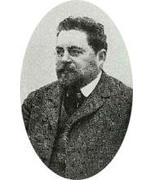
Gaston Leroux
Gaston Leroux

Gaston Leroux (1868–1927) was a French journalist, novelist, and playwright, best known for writing the gothic thriller "The Phantom of the Opera" published in 1910. Beginning his career as a court reporter and theater critic, he later devoted himself to fiction, producing over 40 novels. "The Phantom of the Opera" became his most enduring work, captivating readers with its mysterious atmosphere and romantic tension. In addition to this masterpiece, he authored "The Mystery of the Yellow Room," considered one of the first locked-room mysteries. Leroux's storytelling skill and vivid imagination significantly influenced the development of detective and horror fiction. His works have been adapted countless times for stage, film, and television, making him one of the most widely read French authors of the early 20th century. He died in Nice on April 15, 1927. more

You May Also Like

“… o termo “rios voadores da Amazônia” designa a enorme quantidade de água processada pelas árvores e lançada na natureza em forma de umidade. – A selva funciona como uma gigantesca bomba d’água que capta água do solo e a lança na atmosfera em forma de vapor, e as correntes de ar se encarregam de espalhar pelo mundo. Uma única árvore de modestos 10 metros de altura transpira em média 300 litros de água por dia, e uma mais frondosa, com a copa mais avantajada, de 20 metros de diâmetro, pode liberar até 1.000 litros. Imaginem a quantidade de líquido precioso produzida pelos milhões e milhões de árvores da Amazônia. … Uma parte desse vapor se transforma em chuvas que caem sobre a própria floresta, a outra fica à mercê dos ventos. Estima-se que a quantidade de água transportada pelos rios voadores seja igual ou superior à vazão do rio Amazonas. São 200 mil metros cúbicos de água por segundo. Na prática, a maior parte dos rios voadores são direcionados pelos ventos para o oeste até o paredão de 5 mil metros de altura formado pela Cordilheira dos Andes. O resultado desse represamento gigantesco são as enormes precipitações de chuva e neve, que dão origem às nascentes de vários rios, entre eles a do próprio Amazonas. Outra parte é ricocheteada pelas montanhas para o interior do continente, e abastece fartamente de água o Centro-Oeste, o Sudeste e o Sul do continente. Esse fenômeno explica por que no restante do mundo, nessa mesma latitude, encontramos grandes desertos, enquanto na América do Sul predomina um clima muito favorável para a agricultura. A combinação da floresta tropical amazônica com a Cordilheira dos Andes forma um dos maiores celeiros do mundo. Sem floresta, não haveria rios voadores, a umidade cairia a níveis desérticos e o ar ficaria muito mais quente. Seria um completo desastre para o clima e para a agricultura brasileira e mundial.”

“In his comprehensive survey of romantic landscape lithographs, Jean Adhemar has demonstrated that these albums were made up of topographic prints in a picturesque mode, depicting both foreign and French scenes. While albums depicting foreign scenes were generally devoted to a single country, those showing French scenes usually took the form of regional albums that featured a department, a historic region (Normandy, Brittany), or a mountain range (the Pyrenees or the Jura). The importance they played may be gauged not only from the considerable number of albums that were published but also from the substantial editions that were printed, particularly of the albums that were published in Paris.”

“It is clear, therefore, that there is enough evidence of historical memory in India to render the line of investigation adopted here worth pursuing. It is true that Hindu India does not possess a sustained tradition of historiography of the kind we find in other ancient cultures such as Greece, Rome and China. Sometimes cultures exhibit such civilizational gaps. For instance, China has a long history, a history of warfare and chivalry as well, and of course a literary tradition right from Confucius onwards, but it did not produce an epic of the kind we find in Greece, Rome and India. One reason behind this histographic gap in India could be that historical events in ancient India were recorded on stone rather than paper. This renders the facts narrated above particularly signficant, as they are cut in stone. India has more than 90,000 inscriptions, most of which are still unread.”

“Él tenía cuarenta. El hombre enterrado bajo esa lápida, y que había sido su padre, era más joven que él. Y la ola de ternura y compasión que de golpe le colmó el corazón no era el movimiento del ánimo que lleva al hijo a recordar al padre desaparecido, sino la piedad conmovida que un hombre formado siente ante el niño injustamente asesinado, algo había ahí que escapaba al orden natural y, a decir verdad, ni siquiera tal orden existía, sino sólo locura y caos en el momento en que el hijo era más viejo que el padre.”