Quotessence
Home / Quotes / Quote by Kenneth Oppel

Quote by Kenneth Oppel

“I felt like I was seeing Shannon through a new lens, undistracted by Jennifer's nuclear glow. I could see how pretty she really was, how kind her eyes were.”

Quote by Kenneth Oppel

Work

Half Brother

Browse quotes and source details for this work. more
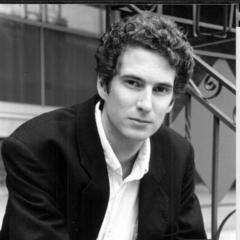
Author

Kenneth Oppel
Kenneth Oppel

Kenneth Oppel is a renowned Canadian author known for his young adult literature. Born on August 31, 1967, he has been writing since the 1980s and has published numerous works, including science fiction, fantasy, and adventure novels. Oppel's books are appreciated for their rich imagination and profound themes. more

You May Also Like

“نحن نقدّر أنفسنا ونرى أننا نستحق أن نُحَبْ. تلك هى الفكرة التى تؤرقنا منذ كنا فى المهد. عندما نكبر نخشى أن تكون فكرتنا عن أنفسنا خاطئة، ربما نحن غير جديرين بالحب، ربما نحن أقبح أو أسمج أو أغبى أو أضعف من أن نروق للآخرين، و هكذا يكون اللقاء الأول مرعبًا قدر ما هو ممتع. الاختبار الأول لك فى عينىّ من؟ فى عينىّ الإنسان الوحيد الذى يهمك فى الكون كله. ليت صوتى أجمل.. ليت أنفي أصغر.. ليت قامتي أطول.. ليتني.. ليتني شخص آخر!”

“At least a third of a woman's life is marked with aging; about a third of her body is made of fat. Both symbols are being transformed into operable condition--so that women will only feel healthy if we are two thirds of the women we could be. How can an "ideal" be about women if it is defined as how much of a female sexual characteristic does not show on her body, and how much of a female life does not show on her face?”

“Voll Blüten steht der Pfirsichbaum nicht jede wächst zur Frucht sie schimmern hell wie Rosenschaum durch Blau und Wolkenflucht. Wie Blüten geh'n Gedanken auf hundert an jedem Tag -- lass' blühen, lass' dem Ding den Lauf frag' nicht nach dem Ertrag! Es muss auch Spiel und Unschuld sein und Blütenüberfluss sonst wär' die Welt uns viel zu klein und Leben kein Genuss.”

“Between the dark, heavily laden treetops of the spreading chestnut trees could be seen the dark blue of the sky, full of stars, all solemn and golden, which extended their radiance unconcernedly into the distance. That was the nature of the stars. and the trees bore their buds and blossoms and scars for everyone to see, and whether it signified pleasure or pain, they accepted the strong will to live. flies that lived only for a day swarmed toward their death. every life had its radiance and beauty. i had insight into it all for a moment, understood it and found it good, and also found my life and sorrows good.”

“Women are mere "beauties" in men's culture so that culture can be kept male. When women in culture show character, they are not desirable, as opposed to the desirable. A beautiful heroine is a contradiction in terms, since heroism is about individuality, interesting and ever changing, while "beauty" is generic, boring, and inert. While culture works out moral dilemmas, "beauty" is amoral: If a woman is born resembling an art object, it is an accident of nature, a fickle consensus of mass perception, a peculiar coincidence--but it is not a moral act. From the "beauties" in male culture, women learn a bitter amoral lesson--that the moral lessons of their culture exclude them.”

“Since middle-class Western women can best be weakened psychologically now that we are stronger materially, the beauty myth, as it has resurfaced in the last generation, has had to draw on more technological sophistication and reactionary fervor than ever before. The modern arsenal of the myth is a dissemination of millions of images of the current ideal; although this barrage is generally seen as a collective sexual fantasy, there is in fact little that is sexual about it. It is summoned out of political fear on the part of male-dominated institutions threatened by women's freedom, and it exploits female guilt and apprehension about our own liberation -- latent fears that we might be going too far.”