Quotessence
Home / Quotes / Quote by F. Scott Fitzgerald

Quote by F. Scott Fitzgerald

“There was a machine in the kitchen which could extract the juice of two hundred oranges in half an hour, if a little button was pressed two hundred times by a butler’s thumb.”

Quote by F. Scott Fitzgerald

Work

The Great Gatsby

F. Scott Fitzgerald's 'The Great Gatsby' is a timeless narrative that delves into the lives of the wealthy elite during the 1920s. The story follows Jay Gatsby, a mysterious millionaire, and his pursuit of the elusive Daisy Buchanan, a woman from his past. The novel is renowned for its vivid portrayal of the era's excesses and the disillusionment that followed, offering a critical commentary on the American Dream. more
Author

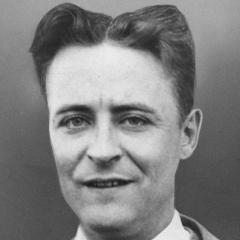
F. Scott Fitzgerald
F. Scott Fitzgerald

F. Scott Fitzgerald was an American author of novels and short stories, renowned for his works that encapsulate the Jazz Age and the Roaring Twenties. His most celebrated novel, 'The Great Gatsby,' is a critical and commercial success, reflecting the themes of the American Dream and the decline of the American upper class. more

You May Also Like

“There is no life without the conditions of life that variably sustain life, and those conditions are pervasively social, establishing not the discrete ontology of the person, but rather the interdependency of persons, involving reproducible and sustaining social relations, and relations to the environment and to non-human forms of life, broadly considered. This mode of social ontology (for which no absolute distinction between social and ecological exists) has concrete implications for how we re-approach the issues of reproductive freedom and anti-war politics. The question is not whether a given being is living or not, nor whether the being in question has the status of a “person”; it is, rather, whether the social conditions of persistence and flourishing are or are not possible. Only with this latter question can we avoid the anthropocentric and liberal individualist presumptions that have derailed such discussions.”

“... I should wish to add, as a tribute to the great merits of your lordship's cellar, that, although I was obliged to drink a somewhat large quantity both of the Cockburn '68 and the 1800 Napoleon I feel no headache or other ill effects this morning. Trusting that your lordship is deriving real benefit from the country air, and that the little information I have been able to obtain will prove satisfactory, I remain, With respectful duty to all the family, their ladyships, Obediently yours, MERVYN BUNTER. "Y'know," said Lord Peter thoughtfully to himself, "I sometimes think Mervyn Bunter's pullin' my leg.”

“Yes, Jeeves?" The man had materialized on the carpet. Absolutely noiseless, as usual. "A note for you, sir." "A note for me, Jeeves?" "A note for you, sir." "From whom, Jeeves?" "From Miss Bassett, sir." "From whom, Jeeves?" "From Miss Bassett, sir." "From Miss Bassett, Jeeves?" "From Miss Bassett, sir." At this point, Aunt Dahlia begged us for heaven's sake to cut out the cross-talk vaudeville stuff. Always willing to oblige, I dismissed Jeeves with a nod, and he flickered for a moment and was gone.”

“Judith Butler ha definido agudamente el género como un sistema de reglas, convenciones, normas sociales y prácticas institucionales que producen performativamente el sujeto que pretenden describir. A través de una lectura cruzada de Austin, Derrida y Foucault, Butler ha identificado el género no como una esencia o una verdad psicológica, sino como una práctica discursiva y corporal performativa a través de la cual el sujeto adquiere inteligibilidad social y reconocimiento político.”