“I'm sorry I was short with him--but I don't like a man to approach me telling me it for my sake. "Maybe it was," said Wylie "It's poor technique." "I'd all for it," said Wylie. "I'm vain as a woman. If anybody pretends to be interested in me, I'll ask for more. I like advice." Stahr shook his head distastefully. Wylie kept on ribbing him--he was one of those to whom this privilege was permitted. "You fall for some kinds of flattery," he said. "this 'little Napoleon stuff.'" "It makes me sick," said Stahr, "but it's not as bad as some man trying to help you." "If you don't like advice, why do you pay me?" "That's a question of merchandise," said Stahr. "I'm a merchant. I want to buy what's in your mind." "You're no merchant," said Wylie. "I knew a lot of them when I was a publicity man, and I agree with Charles Francis Adams." "What did he say?" "He knew them all--Gould, Vanderbilt, Carnegie, Astor--and he said there wasn't one he'd care to meet again in the hereafter. Well--they haven't improved since then, and that's why I say you're no merchant." "Adams was probably a sourbelly," said Stahr. "He wanted to be head man himself, but he didn't have the judgement or else the character." "He had brains," said Wylie rather tartly. "It takes more than brains. You writers and artists poop out and get all mixed up, and somebody has to come in and straighten you out." He shrugged his shoulders. "You seem to take things so personally, hating people and worshipping them--always thinking people are so important-especially yourselves. You just ask to be kicked around. I like people and I like them to like me, but I wear my heart where God put it--on the inside.”
Quote by F. Scott Fitzgerald
Work
The Last Tycoon is a novel by F. Scott Fitzgerald, published posthumously in 1941. It focuses on Monroe Stahr, a brilliant and driven film producer based on real-life Hollywood figure Irving Thalberg. The story examines the glamour and corruption of the movie business during the Golden Age of Hollywood, delving into themes of power, creativity, and personal tragedy. The narrative is told from the perspective of Cecilia Brady, the daughter of a studio executive, offering a nuanced view of Stahr's professional and romantic life. The book remains an unfinished work, with Fitzgerald's notes and outlines providing insight into his intended direction. more
Author
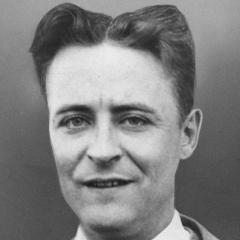
F. Scott Fitzgerald was an American author of novels and short stories, renowned for his works that encapsulate the Jazz Age and the Roaring Twenties. His most celebrated novel, 'The Great Gatsby,' is a critical and commercial success, reflecting the themes of the American Dream and the decline of the American upper class. more
You May Also Like
“Its a matter of time that the money I make become a financial cake that I could eat everyday.”
“Get used to gaps in your comprehension,” said Sabetha. “The rest of us certainly have.”
“She was all sarcasm with a tongue that could cut through you faster than a hot knife in butter.”