Quotessence
Home / Quotes / Quote by Michel Faber

Quote by Michel Faber

“There were no oceans on Oasis, no large bodies of water, and presumably no fish. He wondered whether this would cause comprehension problems when it came to certain crucial fish-related Bible stories. There were so many of those: Jonah and the whale, the miracle of the loaves and the fishes, the Galilean disciples being fishermen, the whole ‘fishers of men’ analogy . . . the bit in Matthew 13 about the kingdom of heaven being like a net cast into the sea, gathering fish of every kind . . . Even in the opening chapter of Genesis, the first animals God made were sea creatures. How much of the Bible would he have to give up as untranslatable?”

Quote by Michel Faber

Work

The Book of Strange New Things

The story follows a pastor who is sent to a distant planet to establish a mission. The novel combines elements of science fiction with religious and philosophical inquiry. more

Author
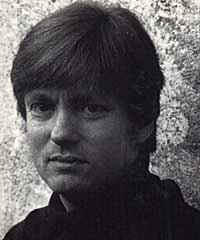
Michel Faber
Michel Faber

Michel Faber is a British writer known for his unique literary style and profound thematic explorations. His works span various genres, including novels, poetry, and plays. Faber's representative work, 'The Book of Strange New Things', is a science fiction novel that delves into religious faith, human exploration, and the mysteries of the universe. more

You May Also Like

“At every point in the story of the transmission of biblical material from the original text to today we are dealing with the interaction of men and women with God. At every point, human judgment and human fallibility are involved, as they are in every attempt we make today to act faithfully in new situations. The idea that at a certain point in this long story a line was drawn before which everything is divine word and after which everything is human judgment is absurd.”

“Dynamic equivalence is a central concept in the translation theory, developed by Eugene A. Nida, which has been widely adopted by the United Bible Societies...Purporting to be an academically linguistic concept, it is in fact a sociocultural concept of communication. Its definition is essentially behavourist: determined by external forces, such as society--with strong pragmatist overtones--focusing on the reader rather than the writer. [M]ost twentieth-century American philosophical endeavours are predominantly pragmatist, dwelling in the shadows cast by William James and John Dewey.”

“Dhambi ya Adamu ilileta mauti duniani (kwa viumbe vyote, si tu kwa binadamu). Hiyo ni kwa mujibu wa Biblia. Kisayansi si kweli; kwa sababu mauti yalikuwepo kabla Adamu na Hawa hawajaumbwa! Lakini haya ndiyo mawazo yangu: Dhambi iliathiri uumbaji wote ikiwemo mimea, wanyama, wadudu na kila kitu kilichoumbwa na Mwenyezi Mungu; ambavyo huteseka kwa sababu ya laana ya dunia. Kama wanyama na mimea visingekuwa vinakufa, binadamu wasingepata mahali pa kuishi. Hata hivyo, kifo cha Yesu msalabani kitafufua kila kitu – kitafufua uumbaji wote.”

“When God intends a mercy for his people, he stirs up the spirit of prayer in them. Fervency unites the soul and directs the thoughts to the work at hand. It will not allow diversions and denies all foreign thoughts seeking to intrude. Pray fervently or you do nothing. Cold praying is no more prayer than a painting of fire is fire. How can prayers that do not even warm your own heart move God’s? A fervent prayer will never find a cold reception with God. Elijah’s prayer called fire down from heaven because it carried fire up to heaven.”