“The primary math of the real world is one and one equals two. The layman (as, often, do I) swings that every day. He goes to the job, does his work, pays his bills and comes home. One plus one equals two. It keeps the world spinning. But artists, musicians, con men, poets, mystics and such are paid to turn that math on its head, to rub two sticks together and bring forth fire. Everybody performs this alchemy somewhere in their life, but it’s hard to hold on to and easy to forget. People don’t come to rock shows to learn something. They come to be reminded of something they already know and feel deep down in their gut. That when the world is at its best, when we are at our best, when life feels fullest, one and one equals three. It’s the essential equation of love, art, rock ’n’ roll and rock ’n’ roll bands. It’s the reason the universe will never be fully comprehensible, love will continue to be ecstatic, confounding, and true rock ’n’ roll will never die.”
Quote by Bruce Springsteen
Book:Born to Run
Work
Born to Run
The book delves into the history of running, the science behind endurance, and the personal stories of runners who push the limits of human capability. more
Author
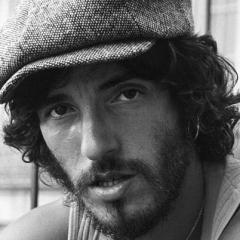
Bruce Springsteen
Bruce Springsteen is a legendary figure in the American rock music scene, born on September 23, 1949. Known for his unique musical style and emotional lyrics, he is often hailed as the 'King of Rock.' Springsteen's music covers a wide range of social, political, and personal themes, beloved by fans around the world. more
You May Also Like
Source: Blues People: Negro Music in White America
“Sie spürte, wie ihr Herz auf Rock 'n' Roll umschaltete.”
Source: Die wundersame Geschichte der Faye Archer
Source: What Would Keith Richards Do?: Daily Affirmations from a Rock and Roll Survivor
“If I sing along a little fucking louder to a happy song I'll be alright.”
“Where's the sun? Sometimes I never see the sun.”
Source: ...Then The Rain
Source: ...Then The Rain
Source: Kitchen Confidential: Adventures in the Culinary Underbelly
“Sometimes I need to Get the Led out . . . in order to get Outta the right side of the bed”