Quotessence
Home / Quotes / Quote by Nick Hornby

Quote by Nick Hornby

“The only scenes I can stand in any of the Star Wars films are the quiet scenes in the second one, The Empire Strikes Back. Or rather, it used to be the second one, before the fourth one became the first one, thus making the second one the third one.”

Quote by Nick Hornby

Author
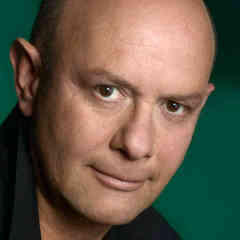
Nick Hornby
Nick Hornby

Nick Hornby is a renowned British novelist celebrated for his witty and insightful storytelling. Born on April 17, 1957, his works delve into the intricacies of modern life and human relationships. Known for his distinctive writing style, Hornby has captured the hearts of readers worldwide with his engaging narratives. more

You May Also Like

“He puts his hands out. "I don't like this plan at all. It didn't work in A New Hope." I tie his wrists together, making sure the rope is tight enough to look convincing but loose enough that he can slip out. "They rescued Princess Leia!" "Obi-Wan Kenobi died, though, even if it was on purpose. And I'm not really sure who's who in this scenario. I'm obviously a Han Solo type. You're maybe a Luke Skywalker. Good hair. Better at fighting than you have any right to be. A bit on the whiny side." "Just for that, I'm declaring you the C-3PO of this mission." "Hey now! That's not fair." "Whatever you say, 3PO.”

“Un altro punto deve essere perfettamente chiaro prima che possa svanire ogni residua paura ancora associata ai miracoli. 2 Non fu la crocifissione a determinare l’Espiazione, ma la resurrezione. 3 Molti Cristiani sinceri hanno frainteso ciò. 4 Chiunque si sia liberato dalla propria credenza nella scarsità non può in alcun modo fare questo sbaglio. 5 Se la crocifissione viene considerata da un punto di vista capovolto, sembra che Dio abbia permesso e addirittura incoraggiato a soffrire uno dei suoi Figli perché era buono. 6 Questa interpretazione particolarmente infelice, emersa dalla proiezione, ha portato molte persone ad avere amaramente paura di Dio. 7 Simili concetti antireligiosi fanno parte di molte religioni. 8 Eppure il vero Cristiano dovrebbe fermarsi un attimo e chiedersi “com’è possibile”? 9 È forse verosimile che Dio Stesso sarebbe capace di pensare in modo tale che le Sue Stesse parole avessero chiaramente stabilito essere indegno di Suo Figlio? " Helen Schucman - Un Corso In Miracoli”

“in the end, I found that the proportions obtain­ing in Colebrooke (British Orientalist, d. 1837)’s 1818 donation to the India Office Library generally held up. Out of a total of some twenty thousand manuscripts listed in these catalogs on Yoga, Nyaya­ Vaisheshika, and Vedanta philoso­phy, a mere 260 were Yoga Sutra manuscripts (in­cluding commentaries), with only thirty­ five dating from before 1823 ; 513 were manuscripts on Hatha or Tantric Yoga, manuscripts of works attributed to Ya­jnavalkya, or of the Yoga Vasistha; 9,032 were Nyaya manuscripts, and 10,320 were Vedanta manuscripts. (...) What does this quantitative analysis tell us ? For every manuscript on Yoga philosophy proper (excluding Hatha and Tantric Yoga) held in major Indian manu­script libraries and archives, there exist some forty Ve­danta manuscripts and nearly as many Nyaya­ Vaisheshika manuscripts. Manuscripts of the Yoga Sutra and its commentaries account for only one­ third of all manuscripts on Yoga philosophy, the other two­ thirds being devoted mainly to Hatha and Tantric Yoga. But it is the figure of 1.27 percent that stands out in highest relief, because it tells us that after the late sixteenth century virtually no one was copying the Yoga Sutra because no one was commissioning Yoga Sutra manuscripts, and no one was commissioning Yoga Sutra manuscripts because no one was interested in reading the Yoga Sutra. Some have argued that instruction in the Yoga Sutra was based on rote memorization or chanting : this is the position of Krishnam­acharya’s biographers as well as of a number of critical scholars. But this is pure speculation, undercut by the nineteenth­ century observations of James Ballantyne, Dayananda Saraswati, Rajendralal Mitra, Friedrich Max Müller, and others. There is no explicit record, in either the commentarial tradition itself or in the sa­cred or secular literatures of the past two thousand years, of adherents of the Yoga school memorizing, chanting, or claiming an oral transmission for their traditions. Given these data, we may conclude that Cole­brooke’s laconic, if not hostile, treatment of the Yoga Sutra undoubtedly stemmed from the fact that by his time, Patanjali’s system had become an empty signifier, with no traditional schoolmen to expound or defend it and no formal or informal outlets of instruction in its teachings. It had become a moribund tradition, an object of universal indifference. The Yoga Sutra had for all intents and purposes been lost until Colebrooke found it.”