Quotessence
Home / Quotes / Quote by Charles de Lint

Quote by Charles de Lint

“I realize that for all my penchant in believing that there's more to the world than what we can see, that folk tales and fairy tales are based on real, if forgotten events, I never accepted that part of it as being real.”

Quote by Charles de Lint

Work

The Onion Girl

In this gripping novel, a young woman's life takes an unexpected turn when she encounters a reclusive and enigmatic figure who offers her a chance at a new beginning. As she becomes increasingly entangled in this man's world, she must confront the dark secrets of her own past and the chilling implications of her new connection. more
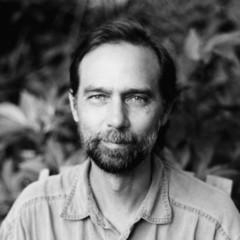
Author

Charles de Lint
Charles de Lint

Charles de Lint, born on December 22, 1951, is a renowned Canadian writer known for his fantasy literature and folk tales. His works span various forms, including short stories, novels, and poetry, and have been translated into multiple languages. De Lint's writing style is unique, characterized by rich imagination and deep understanding of folk tales. more

You May Also Like

“Silence is another element we find in classic fairy tales — girls muted by magic or sworn to silence in order to break enchantment. In "The Wild Swans," a princess is imprisoned by her stepmother, rolled in filth, then banished from home (as her older brothers had been before her). She goes in search of her missing brothers, discovers that they've been turned into swans, whereupon the young girl vows to find a way to break the spell. A mysterious woman comes to her in a dream and tells her what to do: 'Pick the nettles that grow in graveyards, crush and spin them into thread, then weave them into coats and throw them over your brothers' backs.' The nettles burn and blister, yet she never falters: picking, spinning, weaving, working with wounded, crippled hands, determined to save her brothers. All this time she's silent. 'You must not speak,' the dream woman has warned, 'for a single world will be like a knife plunged into your brothers' hearts.' You must not speak. That's what my stepfather said: don't speak, don't cry, don't tell. That's what my mother said as well, as we sat in hospital waiting rooms -- and I obeyed, as did my brothers. We sat as still and silent as stone while my mother spun false tales to explain each break and bruise and burn. Our family moved just often enough that her stories were fresh and plausible; each new doctor believed her, and chided us children to be more careful. I never contradicted those tales. I wouldn't have dared, or wanted to. They'd send me into foster care. They'd send my young brothers away. And so we sat, and the unspoken truth was as sharp as the point of a knife.”

“These tales, without exception, express the truth that justice triumphs in the end. They all contain the idea that it is worth while to fight for the truth, in any situation. In this fight man is assisted by more powerful beings than ordinary mortals. And the triumph of justice is the only sense and consolation in this world. Indeed, the world itself started out with this hope. The human race received it long, long ago as a cradle-song.”

“From that Sunday on Preacher Franklin added a new song to the service called , 'I Am Better Than You' and it went like this: Many years I wandered lost and scared, Through troubles and toils my wickedness flared Then in my darkness I realized what I needed to do Now I do all the right things and I am better than you. Chorus: Better than you, yes I am better than you My life has a purpose and I can tell you what to do Better than you, yes I am better than you If you are a scared miserable loser, I will help pull you through.”