Quotessence
Home / Quotes / Quote by John Adams

Quote by John Adams

“...Turn our thoughts, in the next place, to the characters of learned men. The priesthood have, in all ancient nations, nearly monopolized learning. Read over again all the accounts we have of Hindoos, Chaldeans, Persians, Greeks, Romans, Celts, Teutons, we shall find that priests had all the knowledge, and really governed all mankind. Examine Mahometanism, trace Christianity from its first promulgation; knowledge has been almost exclusively confined to the clergy. And, even since the Reformation, when or where has existed a Protestant or dissenting sect who would tolerate a free inquiry? The blackest billingsgate, the most ungentlemanly insolence, the most yahooish brutality is patiently endured, countenanced, propagated, and applauded. But touch a solemn truth in collision with a dogma of a sect, though capable of the clearest proof, and you will soon find you have disturbed a nest, and the hornets will swarm about your legs and hands, and fly into your face and eyes. [Letters to John Taylor, 1814, XVIII, p. 484]”

Quote by John Adams

Work

The Letters of John and Abigail Adams

This book presents a comprehensive collection of letters exchanged between John Adams, a key figure in the American Revolution and the nation's second president, and his wife Abigail Adams. The letters provide a unique perspective on the personal and political lives of the Adams family during the late 18th and early 19th centuries. They reveal the couple's deep affection, their shared intellectual pursuits, and their active participation in the formation of the United States. more

Author
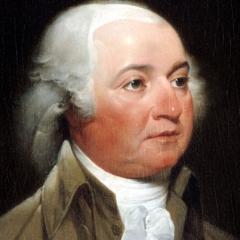
John Adams
John Adams

John Adams, the second President of the United States, was a statesman, diplomat, and writer. Born on October 30, 1735, and died on July 4, 1826, Adams played a significant role in the American Revolutionary War. He was one of the drafters of the Declaration of Independence and served as the President from 1789 to 1797. more

You May Also Like

“We are repelled by the Teutons, because their thoughts will not minister to our private needs; but this instinctive recoil at the same time explains a furtive attraction which was not exhausted by the romantic revival of the eighteenth and nineteenth centuries. The concentration of the Teutons exposes a narrowness of another kind in ourselves; every time we are confronted with a people of another type, a stone in the foundation of our complacency is loosened. We are surprised by an uneasy feeling that our civilization does not exhaust the possibilities of life; we are led to suspect that our problems derive their poignancy from the fact that, at times, we mistake our own reasonings about reality for reality itself. We become dimly aware that the world stretches beyond our horizon, and as this apprehension takes shape, there grows upon us a suspicion that some of the problems which baffle us are problems of our own contrivance; our questionings often lead us into barren fastnesses instead of releasing us into the length and breadth of eternity, and the reason may be that we are trying to make a whole of fragments and not, as we thought, attempting to grasp what is a living whole in itself. And at last, when we learn to gaze at the world from a new point of view, revealing prospects which have been concealed from our eyes, we may perhaps find that Hellas also contains more things, riches as well as mysteries than are dreamt of in our philosophy; after all, we have perhaps been no less romantic in our understanding of Greece than in our misunderstanding of the Teutons and other primitive peoples.”

“In this ideal of justice the apparent conflict between the theories of law and the practice of everyday life is accounted for. The Teutons had a strong inclination for peaceable settlement of disputes, but mediation stood outside trying to effect a reconciliation by mutual agreement without in the least prejudicing the right of frith. Later law reflects an original Teutonic sense of justice insofar as it works up two separate tendencies into one system. The lawyers of the transition age tried to make mediation an integral part of the judicial proceedings and thus tend towards a legal system built up on the weighing and valuation of the offence at the same time as they worked for the abolishing of the ancient right of private revenge. By this harmonising process, Teutonic jurisprudence was gradually led into correspondence with Roman law, but it was slow in abandoning the idea of absolute reparation as the paramount condition of right and justice.”

“The Northmen had a keen eye for psychological signs of mixed race; a saying often on their lips was: "Who is it you take after?" And we have no grounds for supposing that it was only the one side that counted. Thorolfs opponents, the Sons of Hilderid already mentioned, never got over the disability in their birth, that their mother was of an inferior stock to their father's; it was a fault plainly seen in every word they spoke, when they stole into the hall from behind as soon as Thorolf had strode out of the front, and explained and interpreted the action of their enemy, while Thorolf let his act carry its own interpretation. The sagas also have an argument, to the effect that a man's rascality is due to the mother's blood.”

“The relation to the other is not epistemological, but ethical, and the whole attempt to accomodate or account for the other within the confines of my experience already constitutes a breach of this fundamental ethical relation. The other is precisely that which cannot be the object of my experience in the sense of being completely manifest within it, and so cannot be construed as a phenomenon at all.”

“In the human, lo and behold, the possible apparition of an ontological absurdity. The concern for the other breaches concern for self. This is what I call holiness. Our humanity consists in being able to recognize this priority of the other . . . . It is here in this priority of the other man over me that, before my admiration for creation, well before my search for the first cause of the universe, God comes to mind.”