Quotessence
Home / Quotes / Quote by Rebecca Solnit

Quote by Rebecca Solnit

“Pero las verdaderas dificultades, el verdadero arte de la supervivencia, parecen residir en terrenos más sutiles. Lo que se necesita en esos terrenos es una especie de resiliencia psicológica, estar preparado para hacer frente a lo que venga. Estos cautivos ponen de manifiesto de manera cruda y dramática algo que sucede en las vidas de todo el mundo: las transiciones a través de las cuales uno deja de ser quien era.”

Quote by Rebecca Solnit

Work

A Field Guide to Getting Lost

This book delves into the idea of getting lost as a metaphor for personal growth and the exploration of the unknown. It examines the psychological and philosophical aspects of wandering aimlessly and the insights that can be gained from such experiences. more

Author
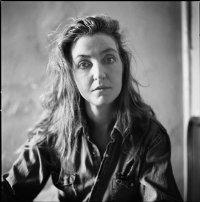
Rebecca Solnit
Rebecca Solnit

Rebecca Solnit is an American writer known for her works on environmental, cultural, political, and social issues. Her writing spans a wide range of topics, including nature, travel, gender, and power. Her books include 'Wanderlust', 'A Field Guide to Getting Lost', and 'The Faraway Nearby'. more

You May Also Like

“En nuestra vida, importa mucho frente a qué debemos resistir en concreto y por qué, el cómo encajar esa resistencia en tu proyecto y tu concepción de la vida social y política. Con este formalismo de la dichosa resiliencia, lo mismo te adaptas al machismo y al fascismo que a un accidente de coche que, de repente, te ha dejado en una silla de ruedas. No es lo mismo. A lo segundo te tienes que adaptar, a lo primero seguramente no.”

“Sin embargo, estaba haciendo algo admirable, probando con qué poco puede vivir el alma. Sin que la alimentara ni el cielo ni la tierra, continuaba hacia delante, lámpara que debería haberse extinguido, proclamando la verdad del materialismo. No tenía Dios, no tenía ningún amante, los dos incentivos usuales de la virtud. Nadie lo contemplaba, ni él se contemplaba a sí mismo, pero las luchas como la suya son los triunfos supremos de la humanidad, sobrepasan cualquier leyenda sobre el Cielo.”

“I can write the saddest poem of all tonight. Write, for instance: "The night is full of stars, and the stars, blue, shiver in the distance." The night wind whirls in the sky and sings. I can write the saddest poem of all tonight. I loved her, and sometimes she loved me too. On nights like this, I held her in my arms. I kissed her so many times under the infinite sky. She loved me, sometimes I loved her. How could I not have loved her large, still eyes? I can write the saddest poem of all tonight. To think I don't have her. To feel that I've lost her. To hear the immense night, more immense without her. And the poem falls to the soul as dew to grass. What does it matter that my love couldn't keep her. The night is full of stars and she is not with me. That's all. Far away, someone sings. Far away. My soul is lost without her. As if to bring her near, my eyes search for her. My heart searches for her and she is not with me. The same night that whitens the same trees. We, we who were, we are the same no longer. I no longer love her, true, but how much I loved her. My voice searched the wind to touch her ear. Someone else's. She will be someone else's. As she once belonged to my kisses. Her voice, her light body. Her infinite eyes. I no longer love her, true, but perhaps I love her. Love is so short and oblivion so long. Because on nights like this I held her in my arms, my soul is lost without her. Although this may be the last pain she causes me, and this may be the last poem I write for her.”