Quotessence
Home / Quotes / Quote by Beverly Daniel Tatum

Quote by Beverly Daniel Tatum

Work

Why are All the Black Kids Sitting Together in the Cafeteria?

The book delves into the reasons behind the common observation of Black students grouping together in school cafeterias, examining the social and psychological factors that contribute to this behavior. It provides insights into the complexities of racial identity and the impact of racial segregation in educational environments. more

Author
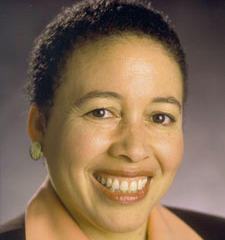
Beverly Daniel Tatum

Beverly Daniel Tatum is an American psychologist and educator, born on September 27, 1954. She is renowned for her research in the fields of race relations and multicultural education, particularly her work on racial identity and racial bias. Professor Tatum teaches psychology at Boston University and has held administrative positions in several academic institutions. more

You May Also Like

“We know how you all want us to cancel black people when they do something bad, but you keep making excuses for people you revere. People say, “can’t we just draw the line at rapists and murderers?” But for us history is rife with horrible men and then we’ve learned that we have to sing praises to those horrible men, and we see them on our money and their names on our schools and our bridges. So horrible man is not a disqualifier. Our lives are imbued with them. When they ask us about Michael Jackson (how can you sing those songs?) and R Kelly; it’s complicated. I will get rid of Michael Jackson when you get rid of Andrew Jackson. At least you can dance to Beat It. But our stories are so full of irredeemably horrible people that it’s something we can compartmentalize. Literally, if Bill Cosby was a priest, he wouldn’t be in prison.”

“The more intense this hegemonic process of forced integration and integral reality is, the more singularities will rise against it. There will be more "rogue states" - states (like Iran, Palestine) that deliberately exclude themselves from the international community without waiting to be excluded, that exclude themselves from the universal and play their own game, at their own risk and peril. There will be more "rogue events" and more refusal of society by individuals. One could say, inverting Holderlin, that "Where Good grows, there grows the Genie of Evil," ("Da, wo des Gute wiichst, wiichst auch der Genius des Bosen"). This more or less clandestine insurrection of antagonistic forces against the integrist violence of the system is less an effect of the mind, the will or even the desire of human beings than the evil genius of the world itself in refusing globalization. To find the only adversary who will face this allpowerful hegemony, we must look for those beings that are strangers to will, exiled from dialogue and representation, exiled from knowledge and history.”

“Even Cobb, who had made a living peddling in Jim Crow stereotypes, and knew it, was moved by Johnson's heroics. He put a curious coda on his article: as a result of what our black soldiers are going to do in this war, a word that has been uttered billions of times in our country, sometimes in derision, sometimes in hate, sometimes in all kindliness-but which I am sure never fell black ears but it left behind a sting for the heart-is going to have a new meaning for all of us, South and North too, and that hereafter n-i-*-*-*-r will merely be another way of spelling the word American”

“The particular combination of the explicit communication of high standards and the demonstrated assurance of the teacher's belief in the student's ability to succeed (as evidenced by the effort to provide detailed, constructive feedback) was a powerful intervention for Black students...it was an exceedingly effective way to generate the trust needed to motivate Black students to make their best effort.”

“...most Americans have internalized the espoused cultural values of fairness and justice for all at the same time that they have been breathing the smog of racial biases and stereotypes pervading popular culture...[it leaves] many Whites feeling uneasy, uncomfortable, and even perhaps fearful in the presence of Black people, often without their conscious awareness of these feelings.”